Who decides what is just?
Today "sophistry" means a crooked argument. But the first sophists were not crooks: they were the teachers of democracy. And their most famous critic, Socrates, never wrote a single line. Let me introduce you to the men who brought philosophy down from the sky to the city square.
The first philosophers looked at the cosmos. They asked what the world is made of and what law governs it. Around the middle of the 5th century BC the question moved. People cared less about the order of the stars than about the order of the city: what is just, who rules, how you win over an assembly.
The reason is simple. In Athens any citizen could vote on the laws, fight in the wars those laws declared and defend himself in court. Knowing how to speak became a matter of power, and sometimes of life and death. Someone had to teach it.
With the sophists we have a problem much like the one we had with the Presocratics: almost everything we know about them was told by their great opponent, Plato. And of Socrates, who wrote nothing, we know what his pupils said, who admired him, and what a comic playwright said, who laughed at him.
The city that talks
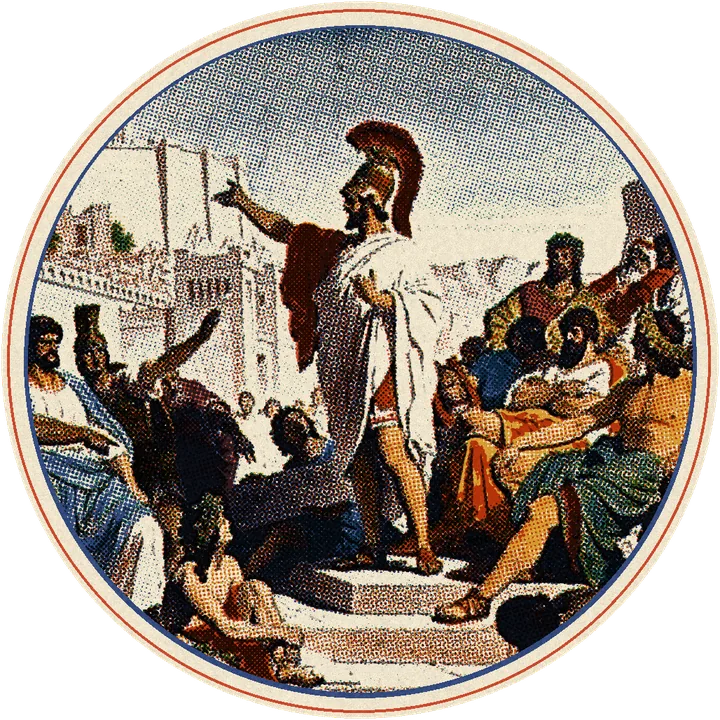
Since 508 BC, after the reforms of Cleisthenes, Athens had been governed by an assembly. Several times a month thousands of citizens climbed the Pnyx hill to debate and vote. There were no parties and no lawyers: everyone spoke for himself. "Citizen", mind you, meant an adult free man born of Athenian parents; women, slaves and foreigners were left out.
The school of Greece
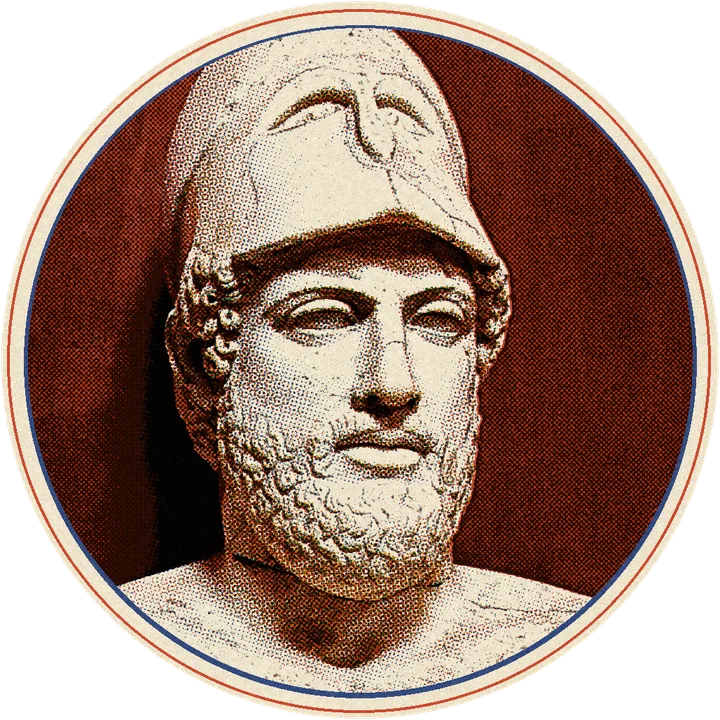
By mid-century Athens is the richest and most powerful city in the Greek world. It is led by Pericles, who called it "the school of Greece". The allies' treasury pays for the Parthenon. And people come from everywhere with something to sell, knowledge included.
Travelling teachers
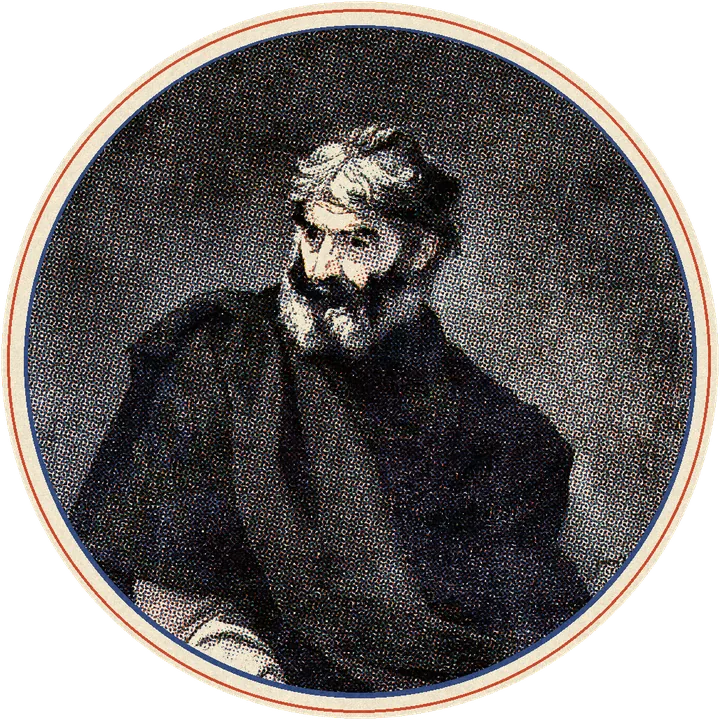
The sophists were not Athenians. Protagoras came from Abdera, in Thrace; Gorgias from Leontini, in Sicily; Prodicus from the island of Ceos; Hippias from Elis; Thrasymachus from Chalcedon, on the Bosporus. They went from city to city giving lessons and lectures. And they charged for it, sometimes a lot.
A dazzling ambassador
In 427 BC Gorgias came to Athens as his city's ambassador to ask for help against Syracuse. According to the historian Diodorus, his way of speaking, full of rhythms and antitheses, left the assembly open-mouthed. He won the alliance and stayed on to teach.
War and plague
Meanwhile Athens and Sparta were bleeding each other dry in the Peloponnesian War. In 430 BC a plague killed a huge share of the population, Pericles included. It was a time of crisis, and in a crisis people argue about what is just and who has the right to rule.
A trial in Athens
Athens lost the war in 404 BC. After a year of oligarchic tyranny, democracy came back. And it was that restored democracy which, in 399 BC, tried and sentenced to death a seventy-year-old Athenian who spent his days asking questions: Socrates.
Wise men for hire
"Sophist" comes from sophos, wise, and at first it was praise. The sophists promised to teach , excellence, which until then had been taken to belong to noble families: you were born with it. If it could be learned, anyone with money to pay the teacher could rise to the top in the assembly.
Plato found that scandalous: charging for wisdom turned it into merchandise. His portrait of the sophists as sellers of tricks is the one that has come down to us. Historians today qualify it: they were, rather, the educators a democracy needed.
Who makes the law?
The Presocratics looked for the arche of nature, its principle. The sophists looked for the principle of the city. And that principle had a name: , law.
From the cosmos to the city
For the first philosophers, physis was everything there is, and the city was just a part of it. With the sophists and Socrates the centre shifts. The question is no longer what the world is made of, but how we should live together. Ethics and politics move to the front, and with them language.
Law is an agreement
Most sophists, led by Protagoras and Gorgias, thought that laws do not come from the gods or from an eternal order. They are : agreements citizens reach after debating in the assembly. That is why they change from city to city, and why they can be changed.
The law of the stronger
A minority answered differently. Look at the animals, they said: in the herd the strongest rules. That is the law of nature, and human laws only disguise it. In Plato's Republic, Thrasymachus claims that "justice is nothing but the advantage of the stronger". This is in its harshest form.
Nomos against physis
The opposition between nomos and physis runs through the whole sophistic movement, with nuances. Antiphon wrote that laws are pacts and nature is necessity. Hippias called law "a tyrant over men", because it separates those whom nature made equal. Between the two extremes there was, and still is, room for many positions in between.
"If the affairs of the city were settled once and for all, why argue in the assembly?"The sophists' underlying question, in today's words
It is no accident that the conventionalist view was the majority one. Sophistry is the child of democracy: without an assembly there is nothing to debate and no one to persuade. The sophists who praised the law of the stronger, on the other hand, do not seem very democratic. Some of the characters Plato gives them end up defending tyranny.
The measure of all things
The two great sophists left two sentences that are still argued over. One seems to say that everything is relative; the other, that nothing exists. Neither means exactly that.
Man is the measure
"Man is the measure of all things: of the things that are, that they are, and of the things that are not, that they are not." Plato explains it with an example: the same wind blows and one person feels cold and another warm. Who is right? Both. There is no view from nowhere. This is what we now call .
Two arguments
According to Diogenes Laertius, Protagoras was the first to say that on every matter there are two opposing arguments. He taught his pupils to defend both sides and to "make the weaker argument the stronger". To his critics it sounded cynical. Seen from the assembly, it was training for debate.
Three theses
Gorgias chained three sentences together. Nothing is. If something were, it could not be known. And if it were known, it could not be communicated to anyone else. It sounds like a joke, but it has a precise target: the "being" of the philosophers, an absolute, eternal and fixed reality. Gorgias does not deny that there are things or that we can know about them; he denies that such knowledge can be absolute.
Speech, a mighty lord
If there is no absolute truth to impose, all that is left is persuasion. In his Encomium of Helen, Gorgias calls speech "a mighty lord, which with the smallest and least visible body achieves the most divine works". , the art of persuasion, was for him the tool of a city of plural opinions.
The woodcarrier
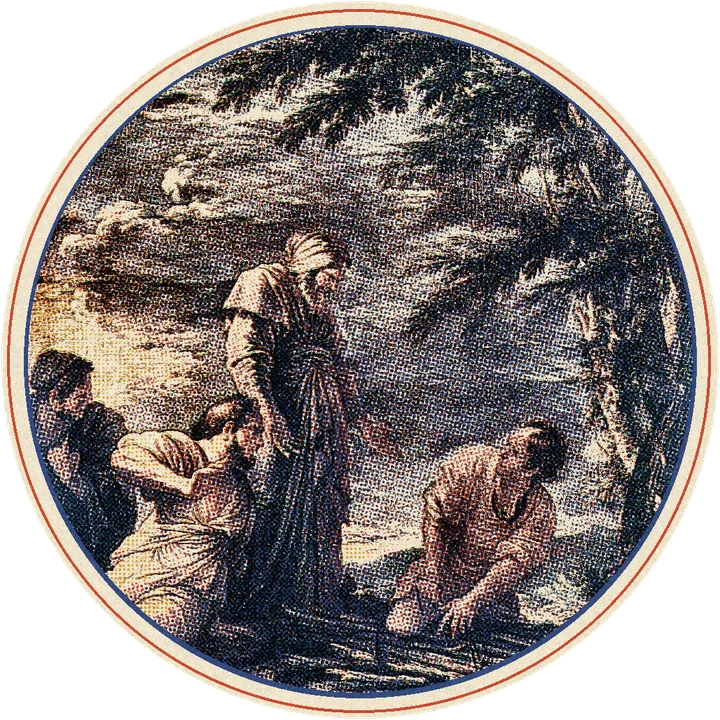
Aulus Gellius tells that Protagoras, as a young man, earned his living carrying firewood. One day Democritus, from the same town, saw how cleverly he had tied the bundle and took him on as a pupil. It is almost certainly made up: Protagoras was older than Democritus. But it says something true about the sophists: talent, not birth, could open doors.
Nor was he a stranger to politics. According to tradition, Pericles asked him to write the laws of Thurii, a colony Athens founded in southern Italy in 444 BC.
Why such insistence on denying an absolute truth about justice? The underlying reason is political. If justice had a fixed essence and a few people knew it, there would be no need for an assembly: obeying those who know would be enough. It is the ancient version of a very current debate, government by experts against government by the people. And pluralism should not be confused with arbitrariness: that laws are human does not mean that any law is as good as any other.
I know that I don't know
Socrates was an Athenian, the son of a sculptor and a midwife. He fought as an infantryman in the Peloponnesian War. He charged nothing, had no school and wrote nothing: he spent his days in the square and the gymnasia, asking questions. To many Athenians he was just another sophist, the most tiresome of them all. He saw himself as the opposite.
Irony
A friend of his asked the oracle at Delphi whether anyone was wiser than Socrates, and the priestess answered no. Socrates, puzzled, went to talk to those who were thought wise. He found that they believed they knew what they did not know. He, at least, knew that he did not know. That ignorance, feigned or genuine, with which he opened his dialogues is his .
Maieutics
Then came the questions. What is justice? Paying back what you owe, someone answers. Even returning a weapon to a friend who has gone mad? And so on, one definition after another, ever closer and never quite there. Socrates said he practised his mother's trade, : helping others give birth to the truth.
What is…?
What Socrates sought was not examples but definitions: not one just act, but what all just acts have in common. A definition valid always and for everyone, as firm as a mathematical proof. Against the sophists' , . Plato, his pupil, would take that search all the way to the world of Ideas.
No one does wrong willingly
Why define justice? To be just. Socrates believed that whoever truly knows what is good will do it, and that doing good is the path to happiness. If someone does wrong it is out of ignorance, not wickedness. This is , a very optimistic view of human beings: evil is cured by teaching.
Know thyself
At the temple of Apollo at Delphi there was an inscription: "Know thyself". Socrates made it his own. But what are we? Not the body, which is only our instrument, but the , the soul. Caring for the soul was everyone's first task. This dualism of soul and body, which Plato developed, would have a very long history.
Ugly as a silenus
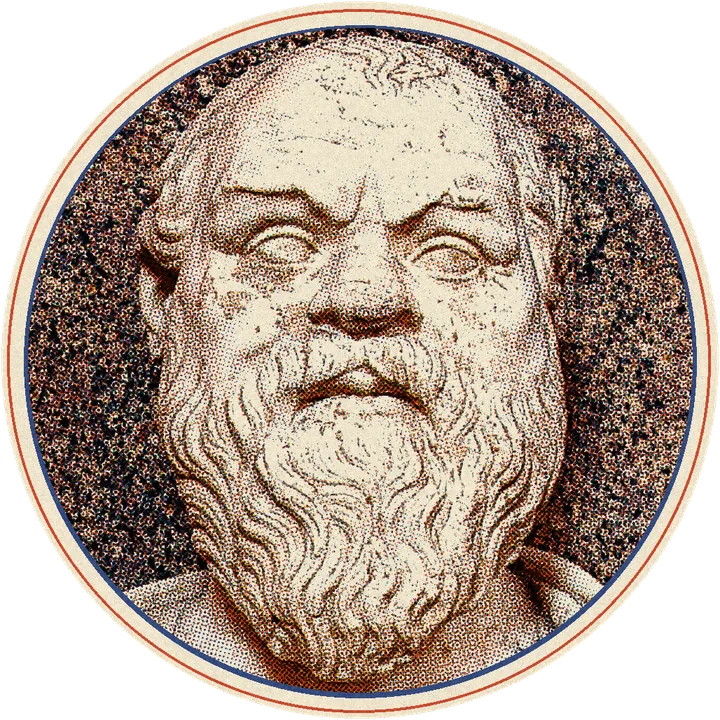
For the Greeks, the beautiful and the good went together. Socrates broke the rule: bald, snub-nosed, bulging-eyed and pot-bellied. In Plato's Symposium, Alcibiades compares him to the silenus figures craftsmen sold: ugly outside, but when opened they held images of gods inside.
We know Socrates through three sources that do not agree. Plato made him the hero of his dialogues; Xenophon, a practical and pious man; Aristophanes, in The Clouds, a charlatan hanging in a basket. Everything we say about him is a reconstruction.
The hemlock
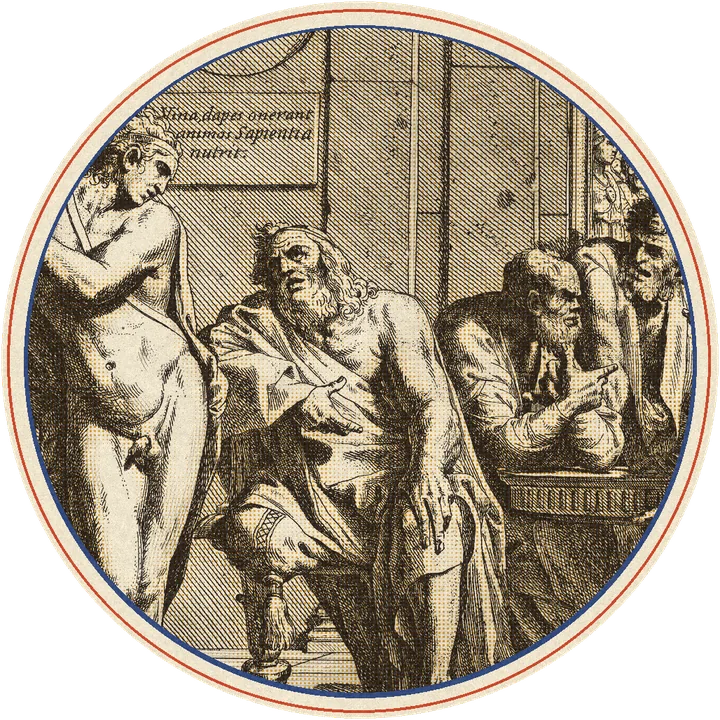
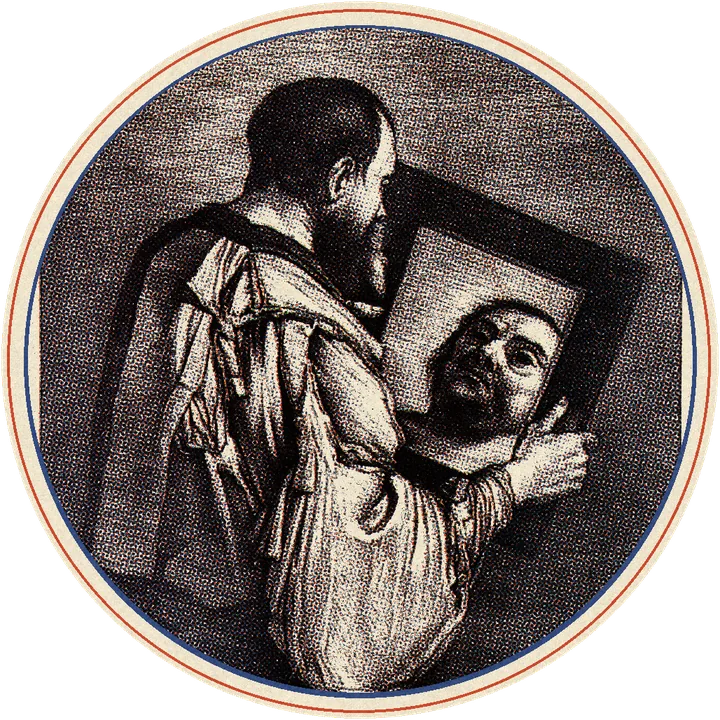
In the spring of 399 BC three citizens, Meletus, Anytus and Lycon, accused Socrates of not recognising the city's gods, of introducing new divinities and of corrupting the young. Behind it lay something more: among his former companions were Alcibiades, who betrayed Athens, and Critias, the leader of the Thirty Tyrants.
A jury of 501 citizens found him guilty by a margin of about sixty votes. When it was his turn to propose a penalty, Socrates ironically asked to be fed at public expense, like an Olympic champion. They sentenced him to death.
Obeying an unjust law
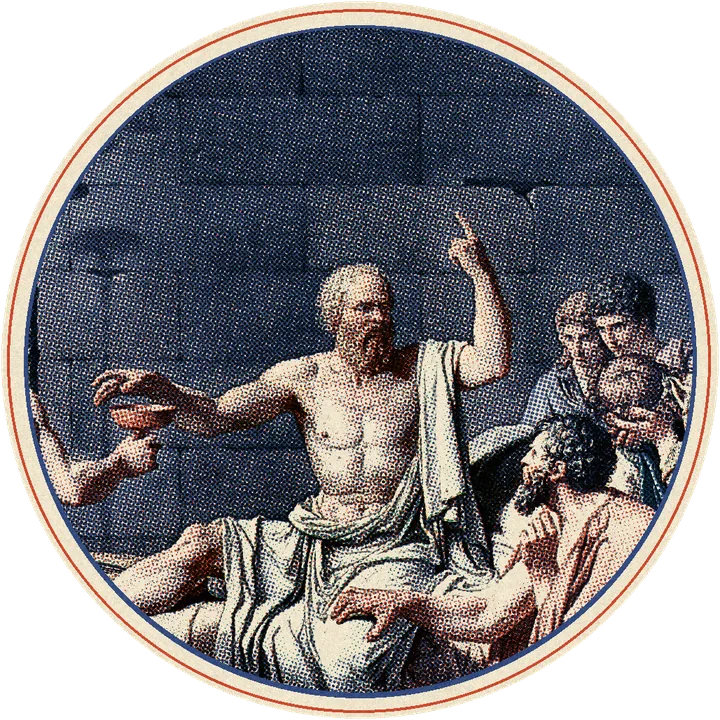
His friends arranged his escape. Socrates refused. According to Plato's Crito, he reasoned that he had lived all his life under the laws of Athens and could not break them now that they harmed him. He drank the hemlock surrounded by his pupils. His last words, according to the Phaedo, were an errand: "Crito, we owe a cock to Asclepius".
His death was also an argument. It showed what happens when a city judges out of interest and fear. Plato, then in his twenties, never forgot it: his political philosophy grows largely out of that trial.
Opinion or knowledge
The sophists · doxa
- Law is a convention: citizens make it.
- Truth about justice is not absolute; there are better and worse opinions.
- The method is rhetoric: persuading.
- They teach for money, to whoever can pay.
- Their ideal city is the assembly that debates.
Socrates · episteme
- Justice has an essence that can be defined.
- Truth is one, even if hard to reach.
- The method is dialogue: asking and refuting.
- He asks for free, anyone, in the street.
- His ideal city is one governed by knowledge.
The contrast is useful, but it should not be overdone. Socrates shared the sophists' interest in language, ethics and politics, and argued with them as with colleagues. What separated them was the answer to one question: whether there is a truth about justice that stands above the debate.
The lives of the sophists and Socrates
Approximate dates. In dark ink, Socrates; in a lighter tone, the three authors who tell us about him. The dashed line marks the year of his death, 399 BC.
An argument still open
History was written by the winners, and in philosophy the winner was Plato. For centuries the sophists were the villains of the story: charlatans selling tricks to win arguments. Since the 19th century, and above all in the 20th, they have been given back their place as serious thinkers about language, law and democracy.
The question that set them against Socrates is still unresolved. Is there a truth about justice that those who know can discover? Or is justice whatever a community decides after arguing it out, and can argue about again? Every time we debate experts against voters, we are still in the agora of Athens. Plato took sides, and that will be the next map.
The sophists taught how to win an argument. Socrates, how to lose one.
Key dates
Tap a date to see what happened.
Thirteen words to understand the sophists and Socrates
Tap each word to find out what it means.
How much do you remember?
Five questions on what you have just read.