What is the world made of?
Two thousand six hundred years ago, in a city on the coast of present-day Turkey, someone stopped asking which god had made the world and started asking what it was made of. That question changed the history of philosophy. Let me introduce you to the first philosophers: the Presocratics.
Before philosophy there were already answers. Hesiod told how in the beginning there was Chaos, and then Earth and Love; how Zeus defeated the Titans and shared out the world among the gods. Those stories explained the origin of everything, but they did not admit questions: you accepted them or you didn't.
At the start of the 6th century BC something changed. A handful of Greeks began to look for the order of the world inside the world itself, rather than in the will of the gods, and to defend their answers with arguments others could dispute. This is usually called the move from myth to , from story to reason. It was not a clean leap, since the first philosophers kept talking about the divine, but it was the beginning of philosophy and of science.
Almost nothing of theirs survives: a few loose sentences, quoted centuries later by authors who sometimes misunderstood them or disagreed with them. From those fragments a whole way of thinking has to be rebuilt. That is why nearly everything that follows comes with an "according to tradition".
From myth to logos
Philosophy was not born in Athens, but on the edges of the Greek world: in the trading cities of Ionia, on the coast of Asia Minor, and later in the colonies of southern Italy and Sicily. They were rich ports, in touch with Egypt, Phoenicia and Babylon, where goods, languages and different gods crossed paths. Perhaps that is why it was easier there to suspect that one's own myths were not the only possible ones.
A world of cities
Greece was not a country but hundreds of independent cities, the poleis, scattered along the coasts of the Mediterranean and the Black Sea. They shared a language, gods and games, and competed with each other in almost everything else.
Miletus
The first scene is Miletus, the great port of Ionia, with dozens of colonies of its own. The first three philosophers lived there: Thales, Anaximander and Anaximenes. Close by, in Ephesus, Heraclitus would think; Pythagoras was born in Samos, and Xenophanes in Colophon.
Westwards
When the Persians conquered Ionia, many Greeks emigrated. Pythagoras settled in Croton, in southern Italy, and founded his community there. Xenophanes wandered the western colonies for decades.
Magna Graecia
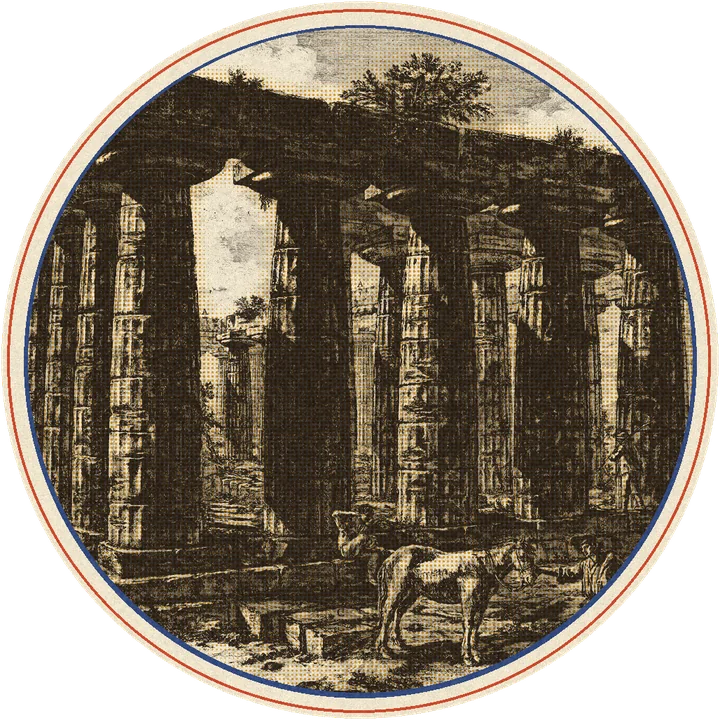
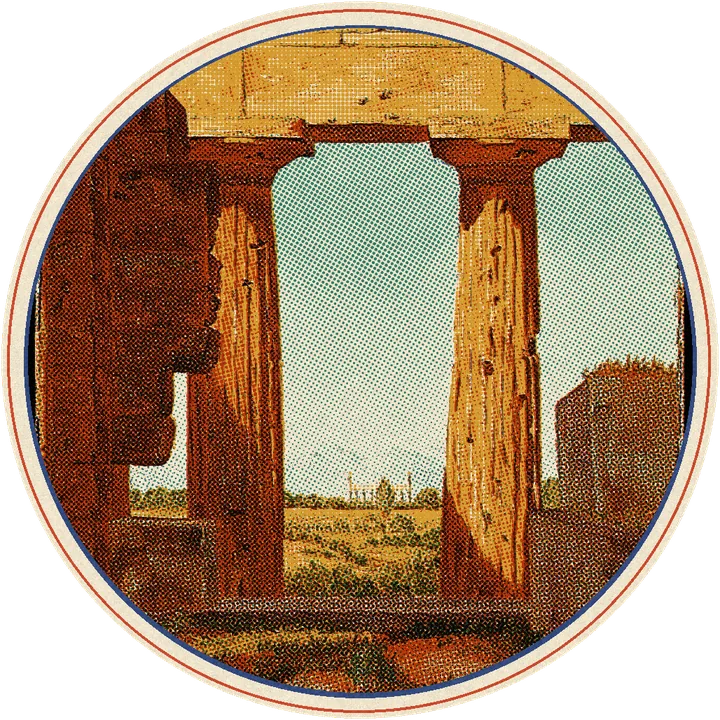
The colonies of southern Italy and Sicily, so rich they were called "Great Greece", took over. Parmenides taught in Elea; Empedocles lived in Akragas. Their temples, like those of Paestum, still stand.
Athens and Abdera
The Persians razed Miletus in 494 BC. Half a century later, Anaxagoras carried Ionian philosophy from Clazomenae to Athens, the new capital of the Greek world. In Abdera, in Thrace, Leucippus and Democritus imagined atoms.
Friends of wisdom
Tradition credits Pythagoras with the word philosophia: he did not call himself wise, sophos, but a friend of wisdom, someone who seeks it because he does not have it. Whether or not the story is true, it describes well what they did. None of them had a sacred book or a priestly caste behind them: they had questions, observations and arguments, and they argued with those who had come before.
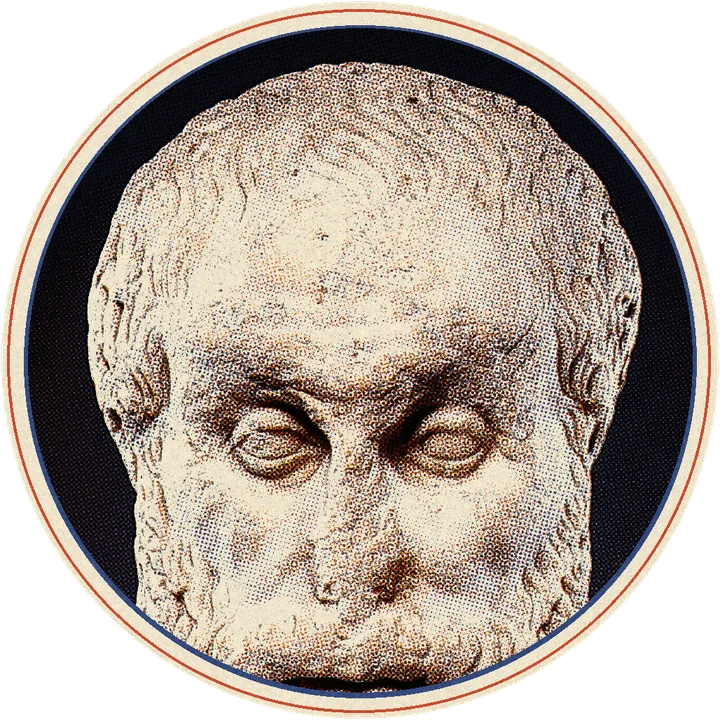
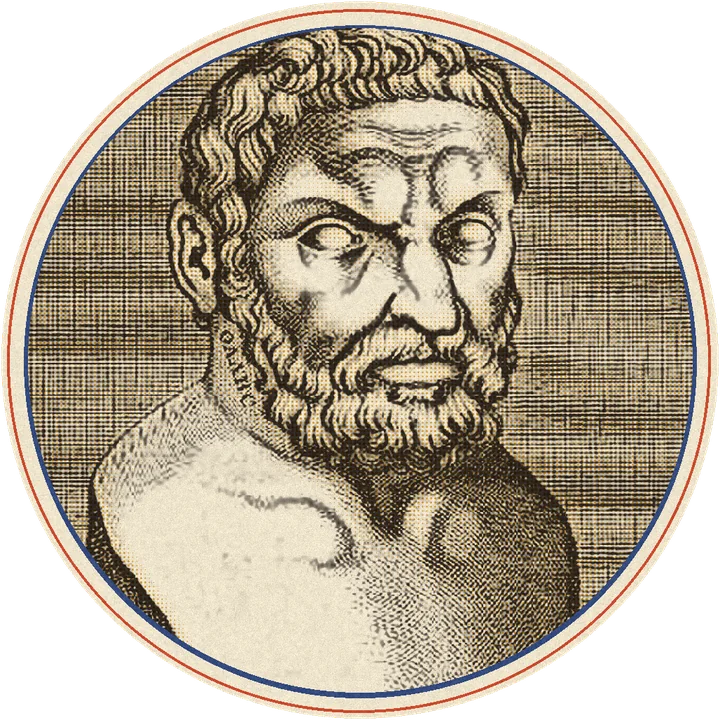
We do not know what they looked like. The portraits of philosophers that survive are Roman copies, made centuries later, of an ideal type: beard, furrowed brow, faraway gaze.
A single principle
All the first philosophers were, at bottom, asking the same question: what is the of ? Both words need explaining. And the three from Miletus gave the same kind of answer: there is a single principle.
Physis and arche
Physis, the root of "physics", is not just nature: it is everything there is, and everything there is changes, is born, grows and dies. The arche is what lies at the centre of that change. The word has two senses: origin, what everything comes from, and principle, what governs it. Hence "archaeology" and "monarchy".
Everything is water
Thales of Miletus, first on the list, said the arche is water. Perhaps because water is the only thing seen in three states, ice, liquid and vapour, and could be the origin of the rest. Or because without water there is no life: today we look for water on Mars for the same reason. According to Aristotle, he also said that "all things are full of gods".
The boundless
His pupil Anaximander went further: the principle cannot be any of the elements, because then the others would have no room. He called it the , the indefinite, that which has no limits. Worlds are born from it and return to it, "paying penalty to one another for their injustice according to the ordering of time".
Air that condenses
Anaximenes went back to an element, air, but added something decisive: a mechanism. When it thins out, air becomes fire; when it condenses, wind, cloud, water, earth and stone. For the first time, differences of quality were explained by differences of quantity.
Looking at the sky
Plato tells how Thales, gazing at the stars, fell into a well, and a Thracian servant girl laughed at him: he wanted to know what was happening in the heavens and could not see what was at his feet. Aristotle tells the opposite: that, to prove philosophy could be useful, he foresaw a great olive harvest, rented every olive press in the district and grew rich. Both stories are probably made up. Both say a lot about how the first philosophers were seen.
"If oxen, horses and lions had hands and could paint, horses would paint the gods like horses, and oxen like oxen."Xenophanes of Colophon, fragment 15
Xenophanes did not look for a new arche, but he did something just as important: the first critique of religion. He did not deny the divine; he rejected gods made in the image of men, who steal, commit adultery and deceive one another, as in Homer. For the Greeks, "divine" did not mean only "god": it was the perfect, the complete, that which lacks nothing. That is why philosophers could call the arche divine without worshipping it.
Everything flows, nothing changes
Around 500 BC, two thinkers pushed the question to its limit, each in a different direction. Both accepted that the world has change and has order. One stressed change; the other, what does not change. Their disagreement kept Greek philosophy busy for the next two centuries.
Everything flows
Heraclitus of Ephesus is the philosopher of change. "You cannot step twice into the same river": the water is already different, and so are you. Day turns into night, the cold grows warm, the living die. His image of the cosmos is fire, "ever-living, kindling in measures and going out in measures".
The logos
But the important part of that sentence is "in measures". Change is not chaos: it is governed by a law, the . And that law is a tension between opposites, like that of a bow or a lyre, which only shoot or sound because the string pulls two ways. Without war there is no peace; without illness, health would not be sweet.
What is, is
Parmenides of Elea wrote a poem in which a goddess shows him two paths. The first says that what is, is, and cannot not be. What is neither comes into being nor perishes, because it would have to come from nothing; it does not move or divide. It is one, complete and finished, and Parmenides compares it to a perfect sphere.
Two paths
The second path is that of , the opinion of mortals, who believe what they see: things that are born, change and vanish. For Parmenides, change implies non-being, and non-being can be neither thought nor said. "Thinking and being are the same." Reason outranks the senses.
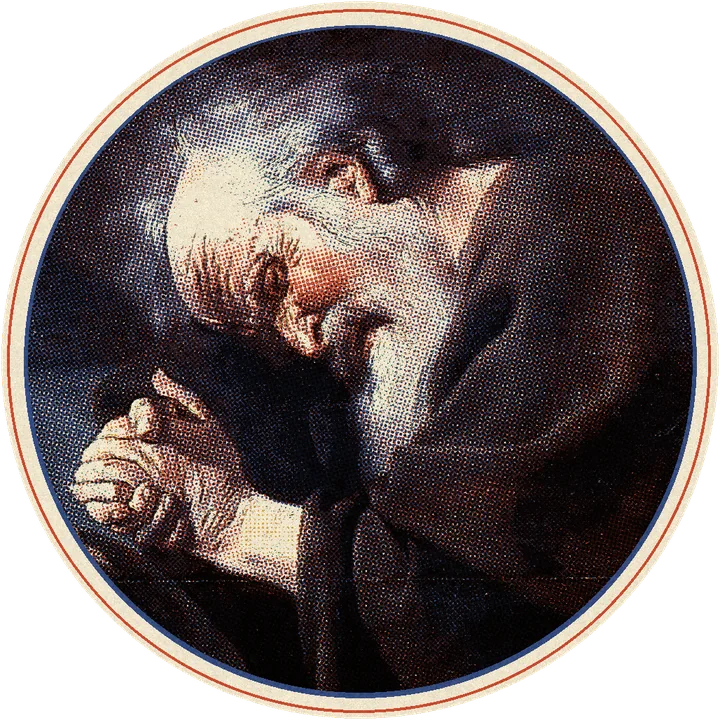
Heraclitus · becoming
- Reality is change: everything flows.
- Order is the logos, a tension between opposites.
- His image is fire, or the river.
- The senses see change, but its law must be understood.
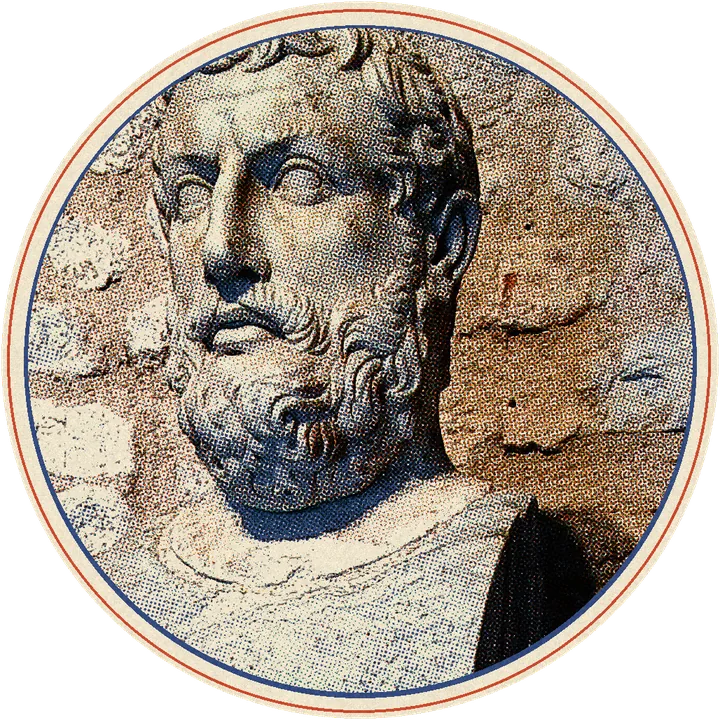
Parmenides · being
- Reality is one, unmoving and eternal.
- Change is appearance: it implies non-being.
- His image is the sphere.
- The senses deceive; only reason reaches the truth.
Almost everything that came afterwards tried to reconcile them. Plato, for instance, solved it by splitting the world in two: a sensible world that changes, like Heraclitus's, and a world of eternal Forms, like Parmenides's being.
The world is number
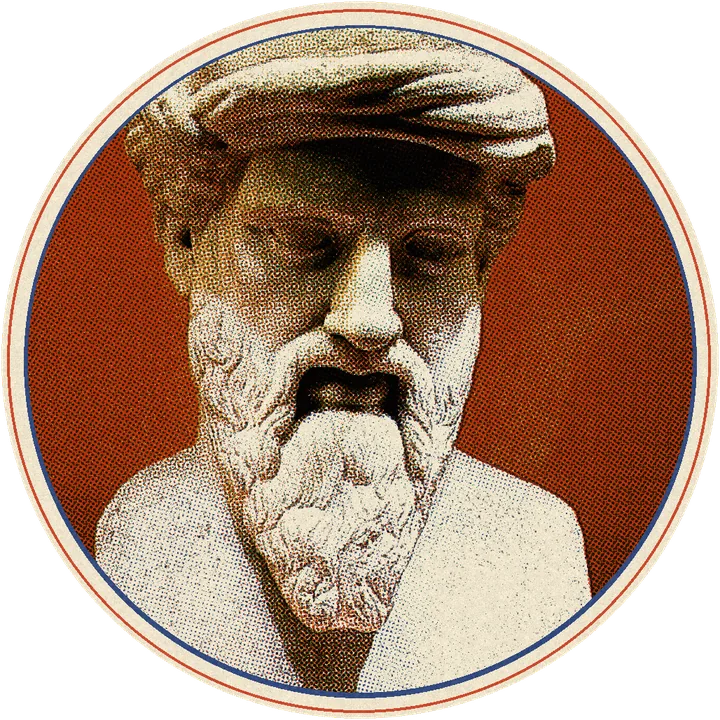
In Croton, Pythagoras founded something halfway between a school, a religious sect and a political party. Its members shared their goods, kept silence, did not eat beans and believed in the transmigration of souls. Pythagoras wrote nothing, and his followers credited him with all their discoveries, so it is impossible to know what he thought and what they did. What we do know is his answer to the question of the arche: numbers.
The tetractys
For the Pythagoreans, numbers were not abstract symbols but figures made of dots. The most sacred was the : ten dots in a triangle of four rows. 1 + 2 + 3 + 4 = 10, the perfect number. They swore oaths by it.
The limited and the unlimited
The fundamental opposition was between even and odd. Two is drawn as two dots forming a line with no end: it is the unlimited. Three is drawn as three dots that close a triangle: it is the limited. And the limited was the good, the harmonious, the rational.
The music of proportions
According to tradition, Pythagoras discovered that harmonious notes follow simple ratios: half a string sounds an octave higher (1:2); two thirds, a fifth (2:3); three quarters, a fourth (3:4). If music is number, perhaps everything is. Two thousand years later, Galileo would write that the book of nature is written in the language of mathematics.
Numbers that will not be measured
If everything is number, everything should be expressible as a ratio of whole numbers. But the diagonal of a square with side one cannot: it is the square root of two, an irrational number, with no pattern and no end. Legend says the discovery was kept secret, and the Pythagorean who revealed it, Hippasus, drowned at sea as punishment from the gods. It probably did not happen that way, but the crack was real: the unlimited had slipped inside mathematics.
Many principles
After Parmenides it was no longer enough to say that everything comes from one thing: you had to explain how there can be change without something arising from nothing. The philosophers of the second half of the 5th century BC found a way out by accepting that nothing is really born or dies, and that what we call birth and death is only mixing and separating. For that they needed more than one principle: they were the .
Four roots
Empedocles of Akragas proposed four "roots" of all things: earth, water, air and fire. Each thing is a mixture of them in different proportions. The four elements would last in European science for more than two thousand years.
Love and Strife
But the elements do not move by themselves. Two forces act on them: Love, which unites them, and Strife, which separates them. The world is an endless cycle in which each force rules in turn. When Love reigns, everything is a sphere; when Strife reigns, everything scatters.
A mind that orders
Anaxagoras of Clazomenae imagined an original mixture of infinite particles, the , in which "all things were together". What separates and orders them, setting the mixture spinning like a whirlwind, is , a mind. In Athens he was charged with impiety for saying the sun was a red-hot stone.
Atoms and void
The most radical answer came from Abdera. Everything is made of indivisible particles, , which differ only in shape, size and position, and which move in the void. When they collide, they hook together and form bodies; when they separate, bodies vanish. There are no gods and no purpose: only necessary collisions.
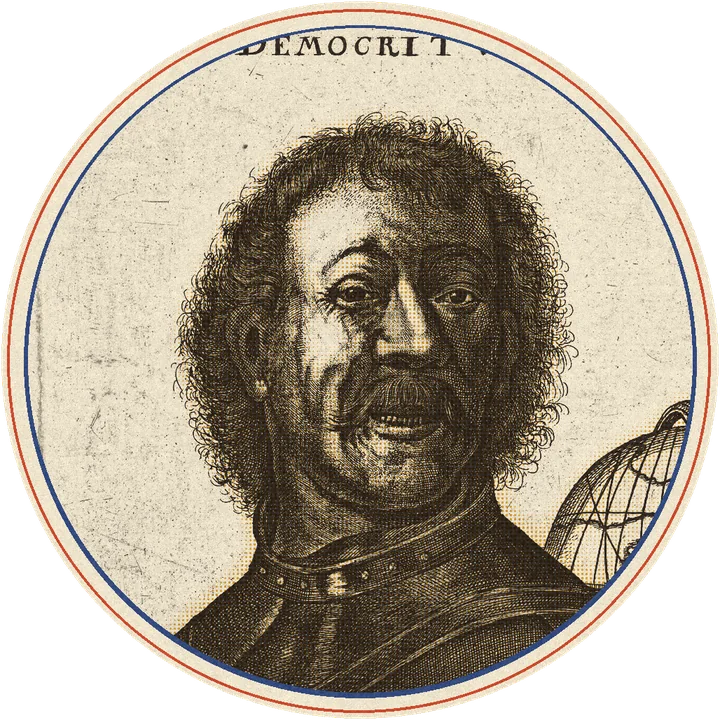
How many principles are there?
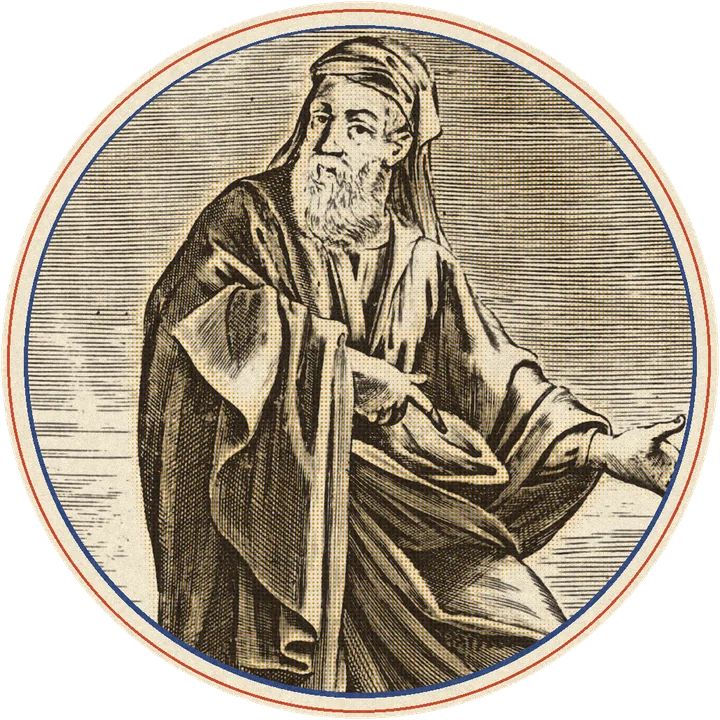
Historians usually sort the Presocratics into two groups. The start from unity and try to explain multiplicity from it; the do the reverse. Heraclitus and Parmenides fit badly in either box.
The lives of the Presocratics
Approximate dates: almost all come from unreliable ancient calculations. Socrates, in dark ink, was a contemporary of the last Presocratics; the name is a modern label.
A question still open
Almost all the Presocratics' answers missed the mark. The world is not made of water, or air, or four roots moved by Love and Strife. But their way of asking is still ours: to look inside nature for the law that explains nature, and to accept that any answer can be disputed. Physicists are still looking for the single principle behind all forces; Democritus's atoms returned to science two thousand years later, though they turned out not to be indivisible.
Around 450 BC, philosophy reached Athens and changed its subject. The Sophists and Socrates stopped looking at the cosmos and looked at the city: justice, virtue, language. But that is the next map.
Before Socrates, the question was what the world is made of. Afterwards, it would be how to live in it.
The key dates
Tap a date to see what happened. Almost all are approximate.
Twelve words to understand the Presocratics
Tap each word to find out what it means.
How much do you remember?
Five questions about what you have just read.