How long does a conquest take?
Around the year 600, nobody in Constantinople or Ctesiphon was looking towards the Arabian desert. A little over a century later, the heirs of a merchant from Mecca ruled from the Atlantic coast to the Indus valley. Let me tell you how it happened: a prophet, four successors who fought over his legacy, a century of conquests and a dynasty that turned that movement into a state. With one surprise: for a long time, the conquerors were a small minority.

We tend to picture the expansion of Islam as a wave: horsemen arrive, cities fall and whole peoples change their faith overnight. The first part is true. The conquests were astonishingly fast, and in barely three generations the Arab armies reached Hispania in the west and Central Asia in the east.
The second part is not. The conquerors did not force their new subjects to convert. Christians, Jews and Zoroastrians kept their temples and their laws in exchange for paying a tax. According to Richard Bulliet's estimates, debated but widely cited, Muslims did not become a majority in Iran until the 9th century. In Egypt the turning point came later still. In fact, mass conversion was a problem for the new rulers: a convert stopped paying the tax owed by unbelievers.
There is another difficulty, less visible. Almost everything we know about Muhammad and the first caliphs was written down by Muslims one or two centuries later. The oldest evidence is coins, inscriptions, papyri and the chronicles of Christians who watched the Arabs arrive without quite understanding who they were. So in this story we will sometimes have to say "according to tradition".
[Nota del vídeo, en el bloque «The map on video»:] If you would rather start with a summary, this video tells the whole story on the map. It is narrated in Spanish; YouTube can show automatic English subtitles.
The video for this topic is in the making. In the meantime, the channel has the videos for the earlier topics (in Spanish).
Arabia between two empires
Seen from Constantinople, Arabia was a fringe: sand, tribes and the odd oasis. But it was a fringe without a wall. Nothing closed it off to the north, and the nomads who crossed it carried everything back and forth: goods, mercenaries, coins and gods.
Desert and oasis
Inland, only the Bedouin knew how to get around. Herders and caravan guides, they lived in clans that shared pastures, wars and migrations. To know who was who, they counted blood, genealogy and poetry. The south was another world, of farmers and cities: the Romans called it Arabia Felix, "Happy Arabia".
The buffer kingdoms
Byzantium and Persia watched each other through third parties. The Persians backed the Lakhmids, whose capital was al-Hira, on the lower Euphrates. The Byzantines paid the Ghassanid chiefs, horsemen with no fixed capital who guarded the edge of the Syrian desert. They were cheap guardians: they knew the terrain and held back the tribes of the interior.
Ethiopians in Yemen
The south was ruled by the Himyarites, whose last great king had become a Jew. With Byzantine backing, the Christian kingdom of Aksum, in present-day Ethiopia, crossed the Red Sea and took Yemen. Decades later, Yemen would end up in Persian hands.
The Year of the Elephant
According to tradition, Abraha, an Ethiopian warlord who had made himself king of Yemen, marched on Mecca with a war elephant and was miraculously driven back. Sura 105 of the Quran refers to "the people of the elephant". Arab memory placed the birth of Muhammad in that year, around 570. But an inscription of Abraha himself describes a campaign in central Arabia in 552, and the date is still up in the air.
The end of the guardians
Khosrow II deposed the last Lakhmid king and turned al-Hira into a Persian province. The Ghassanids, for their part, had come out of their clashes with Emperor Maurice badly weakened. When Persia and Byzantium launched their last war, nobody was guarding the gate of the desert any more.
Two exhausted giants
For a quarter of a century, Persians and Byzantines tore each other apart. The Persians reached Jerusalem and Egypt, and Heraclius struck back into the heart of Mesopotamia. The peace of 628 left both empires ruined, with their cities sacked and their armies decimated.
Mecca was something else: neither a kingdom nor an empire, but a town of merchants in a valley with no farming. It lived on trade and on a shrine, the Kaaba, which housed the Black Stone and the idols of many tribes. The tribe of Quraysh controlled both the temple and the caravans. Above goddesses such as al-Lat, al-Uzza and Manat stood Allah, "the god". Some Arabs, the hanifs, already believed in a single god without being Jews or Christians. In a way, the ground for an Arab monotheism had been prepared.
The Prophet
Muhammad was born in Mecca, into the clan of Banu Hashim, a branch of Quraysh, and according to tradition he was orphaned as a child. For his life we depend above all on the Sira of Ibn Ishaq. It was written more than a century after his death and survives in the version of Ibn Hisham.
A caravan merchant
His marriage to Khadija, a wealthy widow he worked for, gave him a position in the town. According to tradition, his caravans took him as far as Syria, where he met Jews and Christians. All the dates of his youth are those of tradition.
The revelation
At around forty, according to tradition, he began to receive messages in a cave on Mount Hira, which he attributed to God. His preaching turned on three ideas: one God, the rejection of idols and the coming of the Last Judgement. These messages, recited and memorised, were called Qur'an, "recitation".
The Hijra
Attacking the idols meant attacking the shrine's business. The hostility of Quraysh drove Muhammad and his followers to emigrate to Yathrib, an oasis to the north. Yathrib would come to be called Medina, "the city" of the Prophet. That emigration, the , marks year 1 of the Islamic calendar.
A pact between tribes
In Medina, Muhammad acted as arbiter between feuding clans. The so-called "Constitution of Medina" was not a constitution but a pact of alliance between emigrants, Medinans and Jews. Above the ties of blood a new bond appeared: the , the community of believers.
Victory at Badr
The Muslims began raiding the caravans bound for Mecca. At Badr, according to tradition, they defeated a much larger Meccan force. Years of war followed, and the Jewish tribes of Medina that did not accept the new faith were expelled or wiped out.
The return to Mecca
In 628, at al-Hudaybiyya, Quraysh had agreed a truce with him. The exile was now a power to be negotiated with. Two years later, Muhammad entered the town almost without a fight and, according to tradition, dedicated the Kaaba to the one God. Delegations of tribes came from all over Arabia to submit in exchange for protection.
The Farewell Pilgrimage
Muhammad led one last pilgrimage to Mecca and set its rites, which Muslims still repeat today. He died shortly afterwards in Medina, with no surviving sons and without having named a successor.
What he left behind was a religion of simple, visible practices. The sum up what is expected of a believer. They are the profession of faith, prayer five times a day facing Mecca, almsgiving, fasting in the month of Ramadan and the pilgrimage, at least once in a lifetime. Alongside the Quran, the sunna, the sayings and deeds attributed to the Prophet, would become the other great source of law.
The written word
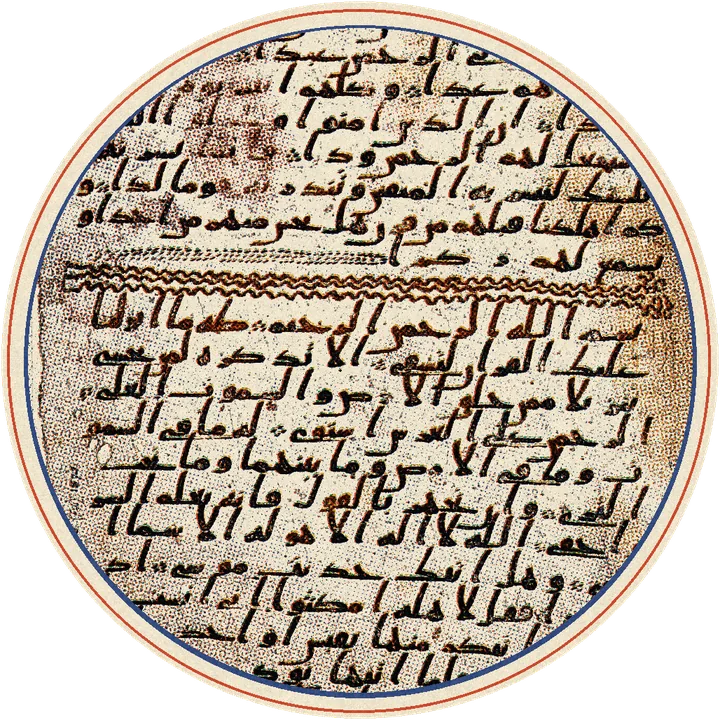
The Quran was first passed on by memory. It was recited with a rhythm close to that of earlier Arabic poetry, in chapters called suras (114 in all) whose verses worked almost as separate units. It was the first book written in Arabic, and its language became the model for the language as a whole.
In 2015, radiocarbon dating of the parchment of some folios kept in Birmingham gave, with 95% probability, a range between 568 and 645. The date belongs to the skin, not to the writing, and specialists argue over what exactly it means. But it places these fragments among the oldest known.
The four caliphs
The death of Muhammad opened the question that would mark the whole history of Islam: who is in charge now, and by what authority? The Prophet had left no clear instructions. The solution was to choose one of his oldest companions, who would take the title of , "successor" or "deputy". Sunni tradition would call these first four caliphs the Rashidun, "the rightly guided".
Abu Bakr and the ridda
The first caliph was the father of Aisha, Muhammad's favourite wife. Many tribes felt that their pact had been with the Prophet, not with his heirs, and stopped paying. Abu Bakr subdued them in the wars of the ridda, or apostasy, and by the end he had a hardened army looking towards Syria.
Umar and the diwan
With Umar the great expansion beyond Arabia began. He created a register, the diwan, which listed every fighter and what he was paid according to how early he had converted. He also took the title of "commander of the faithful". In 644 he was stabbed by a Persian slave.
Uthman and the Quran
He was chosen by a council of companions, who preferred this member of the wealthy Umayyad clan to Ali, the Prophet's cousin and son-in-law. Uthman filled the provincial governorships with relatives. But his name became tied to something more lasting: he ordered a single written version of the Quran. The copies with variant readings circulating in Syria, Iraq and Persia were to be destroyed.
A caliph murdered
The garrisons of Iraq and Egypt felt passed over in the sharing of revenues and rebelled. A group of mutineers killed Uthman in his house in Medina. For the first time, a Muslim had shed the blood of a caliph.
The Battle of the Camel
Ali was proclaimed caliph, but part of Quraysh, led by Aisha, opposed him. Ali defeated them near Basra, in a battle named after the camel from which, according to tradition, Aisha followed the fighting.
Qurans on spears
That left Muawiya, governor of Syria and a kinsman of Uthman, who demanded that the murderers be punished. The armies of Syria and Iraq met at Siffin, on the Euphrates. According to the traditional account, when the Syrians were losing they raised pages of the Quran on their spears, and Ali agreed to put the dispute to arbitration.
Three paths
Some of Ali's men rejected the arbitration: "judgement belongs to God alone", they said, and walked out. They are the , "those who go out". One of them murdered Ali in Kufa in 661, and Muawiya took the caliphate.
Out of that crisis came the three great currents of Islam. The , the shi'at Ali or "party of Ali", hold that power should have stayed in the Prophet's family. The Kharijites thought the caliph should be the best believer, wherever he came from. And the majority, who accepted Muawiya and his successors, would end up being called Sunnis, from the sunna. The labels took several generations to settle, but the rift began here.
A century of conquests
In 634, the armies of Medina left Arabia. Less than eighty years later they were crossing the Strait of Gibraltar and camping on the banks of the Indus. Few empires have grown so fast.
The Battle of the Yarmuk
After winning at Ajnadayn, the Arabs defeated the great army of Heraclius by the Yarmuk, a tributary of the Jordan. According to tradition, the emperor bade farewell to Syria for ever. Damascus and Antioch lay at the mercy of the victors, and Jerusalem surrendered in 637 or 638.
The end of Persia
At almost the same time, another Arab army crushed the Persians at Qadisiyya, in lower Iraq. Soon afterwards Ctesiphon fell (near present-day Baghdad). After the defeat at Nahavand (642), the last king, Yazdegerd III, fled from province to province until he was murdered near Merv in 651. So ended the dynasty that had rivalled Rome for four centuries.
From the Nile to Carthage
Amr ibn al-As entered Egypt with some 4,000 men, according to the chroniclers. Alexandria, the great metropolis of the country, surrendered by treaty. Further west everything was slower. Uqba ibn Nafi founded Kairouan (670), in present-day Tunisia, but the Berbers of Kusayla and of the queen the Arabs called al-Kahina, "the soothsayer", held out for decades. Carthage did not fall until 698.
From the Indus to Samarkand
At the other end, Muhammad ibn al-Qasim was conquering Sind, in present-day Pakistan. Meanwhile the general Qutayba ibn Muslim, who had already taken Bukhara, entered Samarkand. A single caliph, in Damascus, received news from Toledo and from the Indus valley.
Tariq crosses the strait
Musa ibn Nusayr, governor of Ifriqiya (the old Roman province of Africa), sent his Berber freedman Tariq ibn Ziyad, who commanded at Tangier, across the strait. The strait has carried his name ever since: Jabal Tariq, "Tariq's mountain", Gibraltar. By the Guadalete, or somewhere nearby that has never been pinned down, Tariq defeated the Visigothic king Roderic. Within a few years, almost the whole peninsula was in Muslim hands.
The walls of Constantinople
The great prize was still the Byzantine capital. A huge army and fleet besieged it for a year. But the Theodosian Walls, the winter and Greek fire, which set ships ablaze, proved stronger. It was a terrible defeat: the caliphs gave up on taking the city, and the frontier settled on the Taurus Mountains.
Two frontiers
In the west, the Frankish mayor of the palace, Charles Martel, defeated a Muslim raiding expedition that was plundering Aquitaine, somewhere between Tours and Poitiers. European historians turned it into the battle that saved Christendom, a reading now considered exaggerated. In the east, by the river Talas, on the border between present-day Kazakhstan and Kyrgyzstan, a Muslim army defeated Tang China in 751. That defeat put a permanent stop to the Chinese advance westward.
How was it possible? The answer begins with the defeated. In Syria and Egypt, many Monophysite Christians were fed up with Constantinople's taxes and religious pressure. The newcomers offered them a simple deal: keep their faith and their land in exchange for two levies, one on land, the kharaj, and one per head, the . For many, a change of master was no worse. And there was no one left to face them: two exhausted empires and no trace of the buffer kingdoms.
The desert did the rest. The Arabs moved along its routes better than anyone. Instead of scattering across the countryside, they settled in garrison cities, the : Basra and Kufa in Iraq, Fustat in Egypt, Kairouan in Ifriqiya. From there they collected taxes, kept watch and set out on the next campaign, without mixing much with the conquered population.
The expansion was not continuous. It advanced in bursts, and every civil war (Ali against Muawiya, then the one in the 680s) stalled it for years. The end came from within. In 740 the Berbers of the Maghreb, Muslims treated as second-class subjects, rose up, inspired by the egalitarian ideas of the Kharijites. The revolt spread to al-Andalus. The conquering machine had run out of steam.
Six kings on a wall
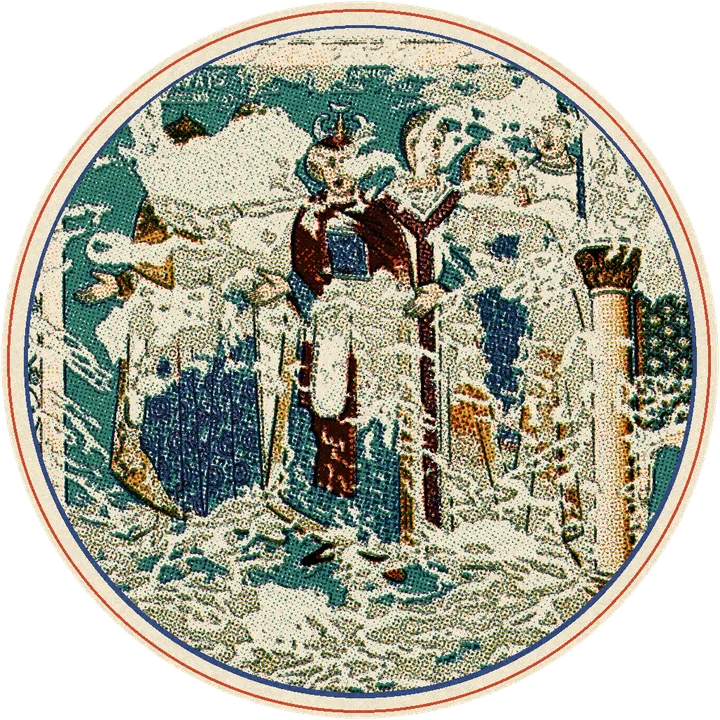
In the middle of the Jordanian desert, an Umayyad prince, probably the future caliph al-Walid II, had the walls of his bathhouse painted. There are hunters, dancers, musicians and a sky full of stars. In one of the rooms, six kings hold out their hands towards the viewer. The labels identify four of them: the Caesar of Byzantium, the king of Persia, the Negus of Ethiopia and Roderic, the last king of the Goths.
The painting is a lesson in Umayyad taste: human figures, nudes, Byzantine technique and Persian iconography in the building of a Muslim prince. It is also a political statement. Between 723 and 743, the court of Damascus saw itself as the heir to all the kings of the world. Roderic, defeated a generation earlier, was already part of its collection.
The caliphs of Damascus
Muawiya was proclaimed caliph in Jerusalem and ruled from Damascus, an old Roman city. With him, the centre of Islam left Arabia, never to return. A warning before we judge this dynasty. Almost everything we know about the Umayyads was written by chroniclers of the Abbasid era. The Abbasids, their successors and enemies, had every reason to paint them as impious tyrants.
A hereditary caliphate
Muawiya made the tribal chiefs swear loyalty to his son Yazid while he was still alive. It was a way of avoiding another war at every succession. His critics saw it as turning the caliphate into a monarchy, and never forgave him.
The death of Husayn
When Muawiya died, Husayn, son of Ali and grandson of the Prophet, rose against Yazid. Umayyad troops surrounded him at Karbala, in Iraq, and killed him along with almost all his companions. For Shiites, Husayn has been the martyr above all others ever since, and his death is remembered every year at Ashura.
Two caliphs at once
A second civil war followed, with two caliphs at once: the Umayyad Marwan in Damascus and Ibn al-Zubayr in Mecca. The Arab tribes split into two blocs, Qays and Yaman, and Marwan's Yemenis won at Marj Rahit. That rivalry would travel with the Arabs all the way to al-Andalus.
A coin without a face
Until then, the caliphs had struck coins copied from Byzantine and Persian ones, with emperors and kings. Abd al-Malik, son of Marwan, replaced them with a gold dinar and a silver dirham with no images, only religious phrases in Arabic. In the same years he ordered the administration, which had been run in Greek and Persian, to switch to Arabic.
Umar II and the clients
Non-Arab converts, the or mawali, were Muslims but went on paying as if they were not. Umar II tried to put them on an equal footing with the Arabs. Tradition, even Abbasid tradition, remembers him as the only pious Umayyad, though his reign was short and his reforms did not last.
The fall
In Khurasan, in eastern Iran, the Abbasids, descendants of an uncle of Muhammad, rallied discontented clients, Shiites and Arabs from the eastern garrisons under black banners. By the river Zab they defeated the last Umayyad caliph, Marwan II, and then hunted down and killed almost his entire family.
A survivor in Córdoba
A grandson of the caliph Hisham, Abd al-Rahman, escaped the massacre. After years on the run across North Africa, he landed in al-Andalus in 755 and the following year proclaimed himself emir in Córdoba. The dynasty that had lost Damascus would survive for almost three centuries at the other end of the world.
What kind of state came out of all this? One in which very few people ruled. Most subjects were still Christians, Jews or Zoroastrians: the , "protected people", free, with their own laws and their own judges as long as they paid. Above them, a small Arab elite kept the weapons and the spoils for itself. In between were the non-Arab converts, attached as clients to an Arab family and treated as inferiors. Their demand for equality fuelled almost every revolt of the period. And at the bottom were the slaves, captives from the wars, whose freeing Islam encouraged.
A traveller crossing the Syrian or Egyptian countryside around the year 700 would have seen far more churches than mosques, some of them newly built. Christians ran much of the administration. John of Damascus, one of the great theologians of the Eastern Church, came from a family of senior officials: his father served the caliphs and, according to tradition, so did he before becoming a monk. The caliphate learned to govern by copying those who already knew how.
A mosaic for a caliph
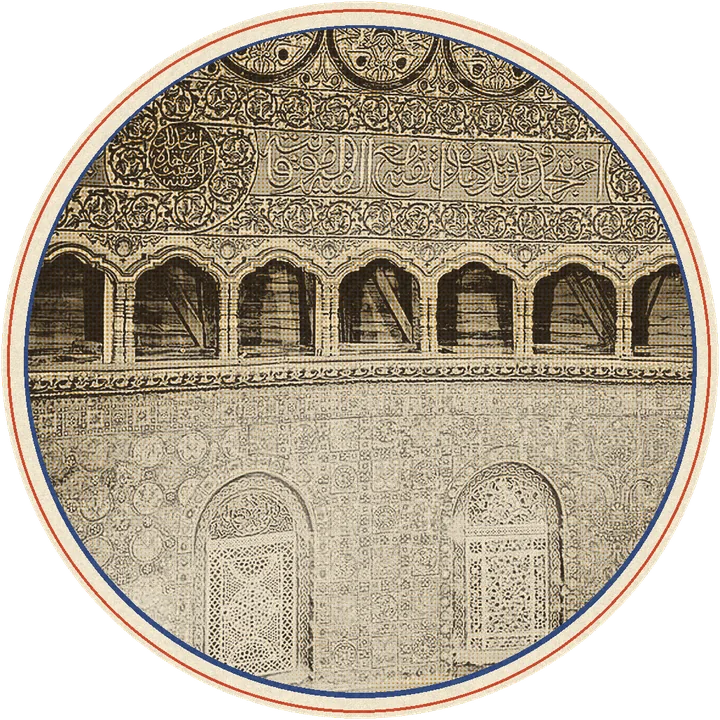
Around 691, Abd al-Malik raised an octagonal shrine in Jerusalem over the rock of the old Temple Mount. Its plan recalls Byzantine churches, and its mosaics were probably made by craftsmen from that same tradition. But the programme is different: no saints or emperors, only trees, fruit, jewels and crowns on gold.
The Arabic inscriptions that run around the interior proclaim that God is one and "has no partner", and they warn the Christians: "do not say 'three'". It was a message in stone, and in gold, addressed to a city that was still Christian.
How to read an Arabic name
Arabs set great store by lineage, and a full name worked like a small family tree. Take the man who ruled al-Andalus at the end of the 10th century: Abu Amir Muhammad ibn Abd Allah ibn Abi Amir al-Ma'afiri al-Mansur. Abu Amir, "father of Amir", is the kunya, a respectful form of address. Muhammad is the given name, the ism. Ibn Abd Allah ibn Abi Amir, "son of Abd Allah, son of Abu Amir", is the nasab, the line of descent.
Then come the nisba, al-Ma'afiri, which shows the tribe of origin, and the laqab, the honorific nickname: al-Mansur, "the victorious". The nasab also worked downwards. On the ivory casket kept in Pamplona, his son Abd al-Malik appears as ibn al-Mansur, "son of al-Mansur". The Christians of the north kept only the laqab. And that is what Spaniards still call him: Almanzor.
Decode five names
Choose a person and tap each piece.
Knowing how to read these pieces helps you keep your bearings in the chronicles, where the same person turns up under different names depending on who is quoting. Each period and each language kept a different part. We remember the first caliph by his kunya, Abu Bakr; his given name was Abd Allah. The conqueror of Hispania, by his ism and nasab: Tariq ibn Ziyad, "Tariq, son of Ziyad". The Latin translators of the Middle Ages took the nasab of two philosophers and bent it out of shape: Ibn Rushd became Averroes, and Ibn Sina, Avicenna.
Many given names are themselves a phrase. Abd means "servant", and it is joined to one of the ninety-nine names of God: Abd Allah, "servant of God"; Abd al-Malik, "servant of the King"; Abd al-Rahman, "servant of the Merciful", which became Abderramán in Spanish. Women carried the same pieces in the feminine: bint, "daughter of", instead of ibn, and Umm, "mother of", instead of Abu. Aisha, Muhammad's wife, was Aisha bint Abi Bakr, the daughter of Abu Bakr.
Give yourself an Arabic name
Fill in the boxes and watch the name assemble. It is a game: the names stay in their English form.
In 632, the community that buried Muhammad fitted into a few oases of the Hijaz. By 750, his heirs ruled millions of people who, for the most part, neither spoke Arabic nor prayed to Allah. To govern them, the caliphs borrowed almost everything: the Byzantine bureaucracy, the Persian court, the mosaics of the churches. What they brought was a language, a coin and a faith that spread slowly, long after the swords had fallen silent.
The conquest took a century. Conversion took several.
The key dates
Press a date to see what happened.
Ten words to understand the rise of Islam
Press each word to find out what it means.
How much do you remember of the journey?
Five questions on what you have just read.