Who decides what to believe?
The Goths who sacked Rome in 410 prayed to the same Christ as the Romans. They spared the churches and those who took refuge in them. And yet, to the bishops of Rome, they were heretics. This is the story of how a persecuted religion became the Church of an empire: how it copied the empire's map, how it argued for centuries about who Christ was, and how, in the deserts of Egypt and on the islands of the north, a handful of monks ended up keeping Europe's books.

We tend to picture the Church of the early Middle Ages as a single block: one pope, one creed, one faith. It was nothing of the sort. In its first centuries as the religion of the empire, Christianity was a shouting match between bishops, emperors, monks and ordinary believers. They argued about who Jesus was, who could forgive sins, who had authority over whom. The losers of each argument went down in history as ; many of them founded churches that still exist.
At the same time, the Church did something no other institution managed: it outlived the Western Roman Empire without changing shape. When the state withdrew, the bishops stayed in the cities, and the monks in their libraries.
The video for this topic is in the making. In the meantime, the channel has the videos for the earlier topics (in Spanish).
A Church shaped like an empire
At the start of the 4th century, Christians were a large minority, above all in the cities of the East, and they had just come through the worst persecution in their history, under Diocletian. In less than a century they went from persecuted sect to state religion.
Freedom of worship
In 313, Constantine and Licinius agreed in Milan on freedom of worship for everyone in the empire. Christianity became one religion among many. Very soon, it became the emperor's favourite: Constantine paid for churches, freed the clergy from civic duties and presided over their assemblies.
One city, one bishop
The Church copied the map of the state. Each city, the civitas, had its bishop, and the territory that depended on it was called a . Several dioceses made up an ecclesiastical province, headed by the bishop of the provincial capital: the metropolitan, who in the West would come to be called an archbishop.
One faith only
With the Edict of Thessalonica, Theodosius ordered all the peoples of the empire to follow the faith of the bishops of Rome and Alexandria. In the following years he banned pagan sacrifice. Nicene Christianity was now the religion of the state, and departing from it, a crime.
The great sees
The Council of Constantinople ranked the oldest churches: Rome, Alexandria, Antioch and Constantinople itself, the "new Rome". Jerusalem would join them in 451. These are the five , each with its own territory and no right to meddle in the others'.
Rome and the new Rome
Canon 28 of the Council of Chalcedon gave Constantinople the same privileges as old Rome, second only in honour. Pope Leo I refused to accept it. This is where a rivalry begins that would end, six centuries later, in the split between the Churches of East and West.
A bishop was much more than a pastor. He judged lawsuits, managed huge estates and spoke for his city before the authorities. Many came from the old senatorial families, and on their death they left their wealth to the Church, which became one of the great landowners of its time. When imperial officials vanished from the West in the 5th century, the bishop was often the only authority left standing: he negotiated with the Germanic kings, fed the poor and guarded the relics of the saints, which protected the city.
That is why kings and emperors wanted to control the choice of bishops, which in theory was made by "the people and the clergy". And that is why the Church paid a price for its privileges: it always needed the protection of the civil power, and the civil power always charged for it.
From Rome to the last village
The 5th-century Church had four rungs, traced from the Roman administration. In the countryside, where Christianity arrived late, bishops created rural parishes and put priests in charge of them. One difference from that time has lasted to this day: in the East, priests could marry; in the West, Pope Leo I extended celibacy to all the higher clergy, though for centuries it was only half observed.
Pope and patriarchs
- The five great sees. Rome claims primacy, through Peter.
Metropolitan
- The bishop of the provincial capital: he consecrates the other bishops and calls the synods.
Bishop
- A city and its diocese. His chair, the cathedra, gives the cathedral its name.
Priest
- In charge of a parish, above all in the countryside. Deacons assist him.
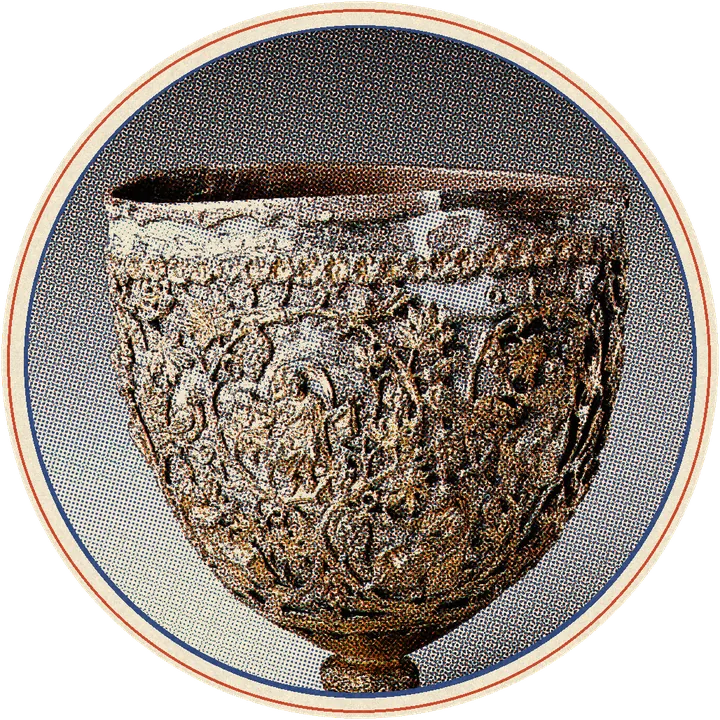
The Grail that was a lamp
When it surfaced in Syria in the early 20th century, some claimed this cup was the Holy Grail, encased in silver by the first Christians. Today it is dated to the 6th century, and the Met's curators think it may have been a lamp. It remains an extraordinary witness: among the vines and animals, Christ sits surrounded by his apostles. It is the image of a Church that was rich, self-assured and thoroughly Roman.
Who was Christ?
Once it was legal, Christianity had to agree with itself. How could there be one God if the Father, the Son and the Spirit were all God? How could Jesus be God and man at once? In the East, where Greek philosophy had a word for everything, the debate left the schools and spilled into the streets.
Arius
Arius, a priest in Alexandria, taught that the Son had been created by the Father: a perfect creature, the first of all, but a creature. "There was a time when he was not," his followers said. His bishop excommunicated him, and the dispute set the East ablaze.
Nicaea
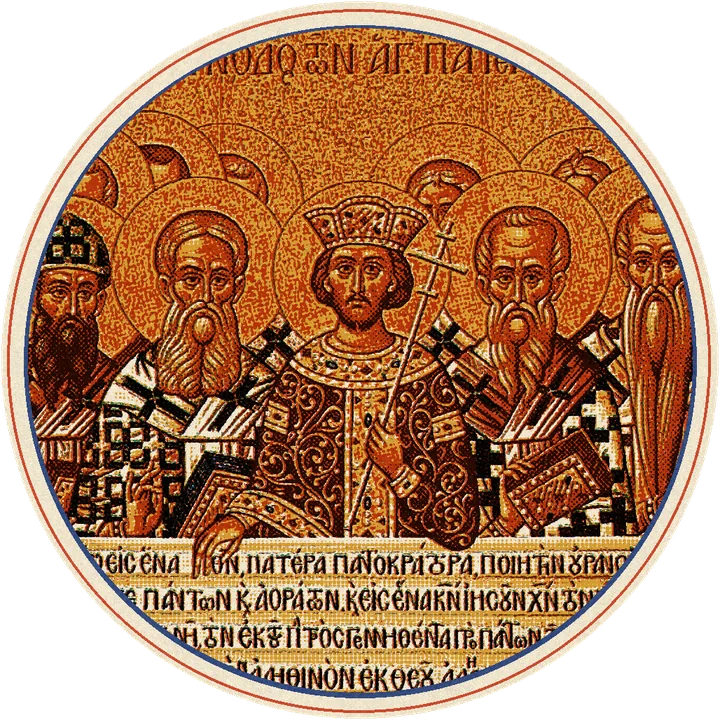
Constantine gathered the first at Nicaea, with some three hundred bishops; it was probably chaired by his adviser, Hosius of Córdoba. The creed they approved says the Son was "begotten, not made", with the Father. They also agreed that every church should celebrate Easter on the same Sunday.
The Bible of the Goths
Nicaea did not finish off Arianism: several emperors, such as Constantius II, favoured it. In that climate Ulfilas was consecrated bishop. He preached to the Goths north of the Danube, invented an alphabet for their language and translated the Bible into Gothic. The Goths became Christians, but Arian ones.
Heretic kings, Catholic subjects
That explains how this story began. Visigoths, Ostrogoths, Vandals and Burgundians were ; their Roman subjects, Catholics. A city could have two churches and two bishops. Clovis's Franks, by contrast, went straight from paganism to Catholicism. The Visigoths would follow under Reccared, at the Third Council of Toledo (589).
Ephesus: Mother of God?
Nestorius, patriarch of Constantinople, separated the human and the divine in Christ so sharply that he refused to call Mary , Mother of God: Mother of Christ, he said. Cyril of Alexandria defeated him at the Council of Ephesus. His followers found refuge in Sasanian Persia, and from there their missionaries reached India and China.
Chalcedon
The opposite error: the monk Eutyches held that Christ had only one nature, the divine. A council at Ephesus backed him in 449; Leo I called it a "robber council". At Chalcedon, some six hundred bishops defined two natures "without confusion, without change, without division, without separation". Egypt, Syria and Armenia did not accept it.
"If you ask about the price of bread, you are told that the Father is greater and the Son inferior."Gregory of Nyssa, on the streets of Constantinople, c. 383
Gregory was exaggerating for a laugh, but not by much. Theological formulas were chanted in the Hippodrome, sparked riots and made or broke political careers. Two things became clear from those fights: only an ecumenical council could fix the faith for everyone, and only the emperor could call one.
Chalcedon left wounds that never healed. Those who rejected it gave rise to the Coptic Church of Egypt, the Syriac Church, called Jacobite after the bishop Jacob Baradaeus, and the Armenian Church. It was long repeated that these Christians, fed up with Constantinople, welcomed the Arabs as liberators in the 7th century. Historians today are more cautious: reactions varied, and the sources that say so were written much later. Many of their heirs today prefer to be called Miaphysites, not Monophysites.
God, man or both
Each answer had its reasons, its texts and its saints. All of them were after the same thing: explaining how someone who is both one of us and God can save humankind.
Arianism
- The Son is a creature, the highest one, but he is not God as the Father is.
- Condemned Nicaea, 325, and Constantinople, 381
Nestorianism
- Two natures so separate they are almost two persons. Mary is the mother of Christ, not of God.
- Condemned Ephesus, 431
Monophysitism
- A single nature: the human is absorbed into the divine.
- Condemned Chalcedon, 451
Chalcedon
- One person and two natures, united without mixing.
- Today Catholics, Orthodox and almost all Protestants
Purity, grace and a sword
In the West there was hardly any debate about the nature of Christ. The great Latin disputes were more practical: who is worthy to give the sacraments, whether people can be saved by their own efforts, how much rigour can be asked of a Christian. The great polemicist in all of them was Augustine of Hippo.
Donatism · c. 311
- Born in Carthage after Diocletian's persecution, against the bishops who had handed over the holy books. It held that a sacrament given by an unworthy priest was invalid. Its name comes from Donatus, rival bishop of Carthage from 313. It split the African Church for more than a century.
Pelagianism · c. 400
- The British ascetic Pelagius denied that Adam's sin was inherited: people can be good through their own effort. Augustine replied that without God's grace no one is saved. It was condemned at Carthage in 418. Pelagius is sometimes presented as a forerunner of Luther, but it is almost the reverse: Luther built on Augustine.
Priscillianism · 385
- Priscillian, bishop of Ávila, preached a radical asceticism with Gnostic echoes and had many followers in Gallaecia and Lusitania. Accused of sorcery, he was beheaded at Trier on the orders of the usurper Maximus: the first Christian executed for heresy by a Christian power. Martin of Tours and Ambrose of Milan protested.
The bishop of Rome
All the patriarchs granted the bishop of Rome a of honour: he was the successor of Peter, the rock on which, according to the Gospel, the Church would be built. In practice, each of them ran his church his own way. Rome imposed its authority little by little, through letters, the decretals, and through missions. And it took advantage of a vacuum: in the West there was no longer an emperor.
Leo the Great
Leo I was the first great pope. His letter on the two natures of Christ was read out at Chalcedon, and the bishops, according to the acts, cried out: "Peter has spoken through Leo." The bishops of Gaul, Hispania and Illyricum recognised his authority.
Attila and Genseric
In 452, Leo went out to meet Attila by the river Mincio, and the Huns withdrew from Italy. Hunger and plague in their army helped as much as the pope did, but the legend went to Leo. In 455 he could not prevent the sack of Rome by Genseric's Vandals; according to tradition, he did stop them burning the city and slaughtering its people.
Two powers
Pope Gelasius I wrote to the emperor Anastasius that the world is governed by two powers: the sacred authority of bishops and the power of kings. And that the bishops' weighs more, because they will answer before God even for kings. The Middle Ages would call it the doctrine of the two swords.
Rome on its own
The arrival of the Lombards cut Rome off. Constantinople was far away and sent no soldiers. In 590 Gregory was elected pope: from a wealthy Roman family, a former prefect of the city and then a monk. In 593, with the Lombard king Agilulf outside the walls, he paid and negotiated on his own. The pope was becoming the lord of Rome.
The mission to Kent
Gregory sent Augustine, prior of his monastery, with some forty monks to the island of the Anglo-Saxons, who were still pagan. They landed in Kent in 597. King Æthelberht, married to the Catholic Frankish princess Bertha, was baptised and gave them land at Canterbury, still the leading see of the Church of England.
"There are two, august emperor, by which this world is chiefly ruled: the sacred authority of the pontiffs and the royal power."Gelasius I, letter to the emperor Anastasius (494)
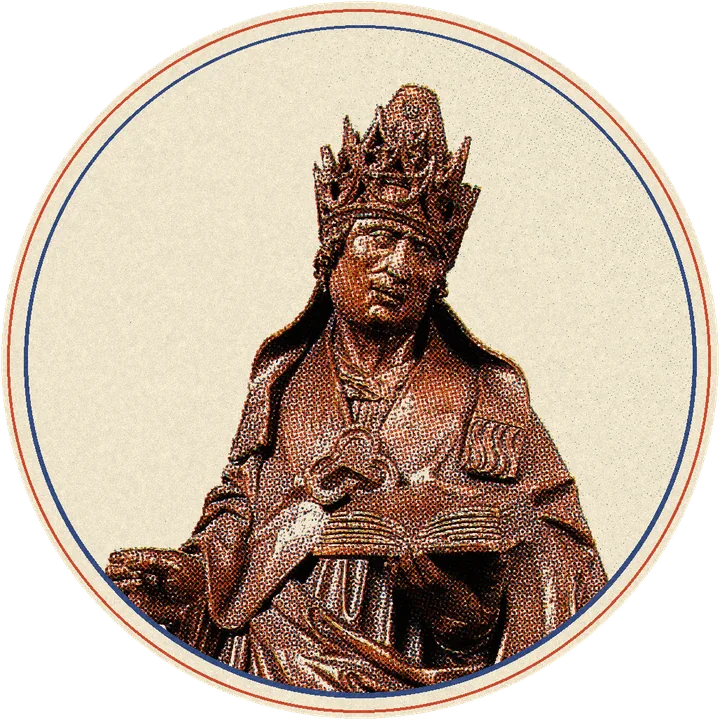
The servant of the servants of God
Gregory signed himself servus servorum Dei, servant of the servants of God, and popes still do. He ran the Church like the senior official he had been: he managed the papal estates from Sicily to Gaul, fed the city with their grain and wrote hundreds of letters that survive to this day. His Dialogues and his Pastoral Rule were read throughout the Middle Ages.
Tradition credits him with Gregorian chant, but that repertoire took shape two centuries later, under the Carolingians, who used his name to lend it prestige. Milan's Ambrosian chant, older still, survived alongside it.
Athletes of Christ
When the persecutions ended, so did the martyrs. Some Christians looked for another way of giving everything: a slow sacrifice, lasting a lifetime. They withdrew to the desert to pray, fast and fight the devil. They were called monachoi, "solitaries".
They saw themselves as athletae Christi, athletes of Christ. The image went back a long way. Saint Paul, writing to Greek cities obsessed with the games, compared the Christian life to a race in the stadium: the athlete denies himself everything to win a crown that withers, the Christian one that lasts for ever. The first to be given the name were the martyrs, who "competed" in the arena of the amphitheatre. When there were no more martyrs, the title passed to the monks. Even their life of hardship had a sporting name: askesis, the root of "asceticism", was the Greek word for an athlete's training. They fasted and kept vigil like competitors preparing for the games, and people came to watch them like champions.
Anthony
Anthony, the son of Egyptian farmers, sold his land and withdrew to the desert. He ended up in a cave near the Red Sea, where, according to his biographer, he died aged over a hundred, in 356. He was the model : alone, without a rule, given over to prayer and penance.
Pachomius
The Egyptian Pachomius, a former soldier, saw the dangers of solitude and founded at Tabennisi, in the Thebaid, a community living under a common rule: manual work, prayer at set hours, Bible study and obedience to a superior. The was born. By his death, thousands of monks and nuns followed his rule.
The lavras
In Palestine, where Hilarion of Gaza led the monastic life, and in Sinai and Syria, a middle way spread: the lavras. Each monk lived in his own cell or cave, and the whole community met on Sundays for the liturgy and a shared meal. Mount Athos, in Greece, still keeps hermitages and lavras.
A man on a pillar
Near Antioch, Simeon climbed a pillar to escape the crowds who sought him out. The pillars grew ever taller, up to about fifteen metres, and he lived on them for more than thirty-five years. Pilgrims from all over the empire came to hear him. He had imitators: the stylites.
Basil
Basil, bishop of Caesarea in Cappadocia, wrote the rule that Orthodox monks still follow. He shunned extreme penance: he asked for work, study and obedience, and put his monks at the service of the poor and the sick. His rule would inspire, a century and a half later, Benedict of Nursia.
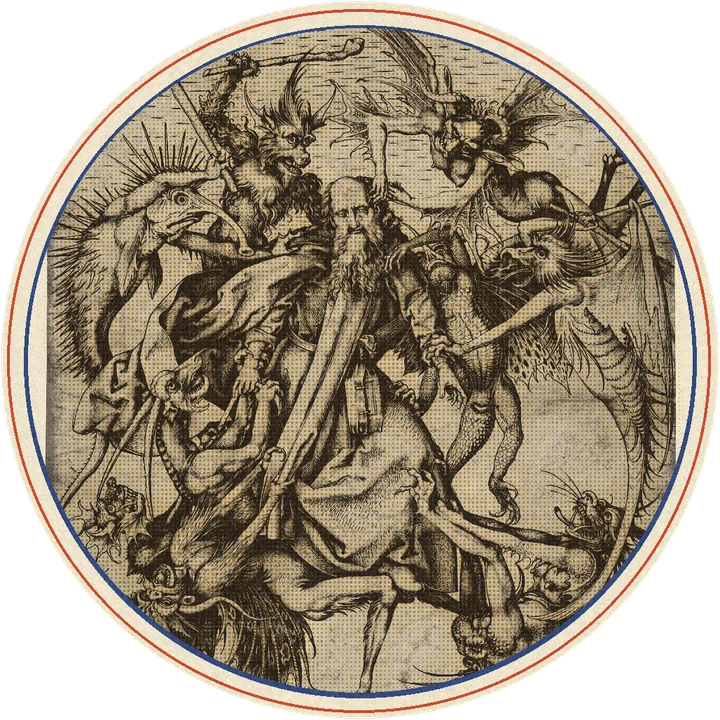
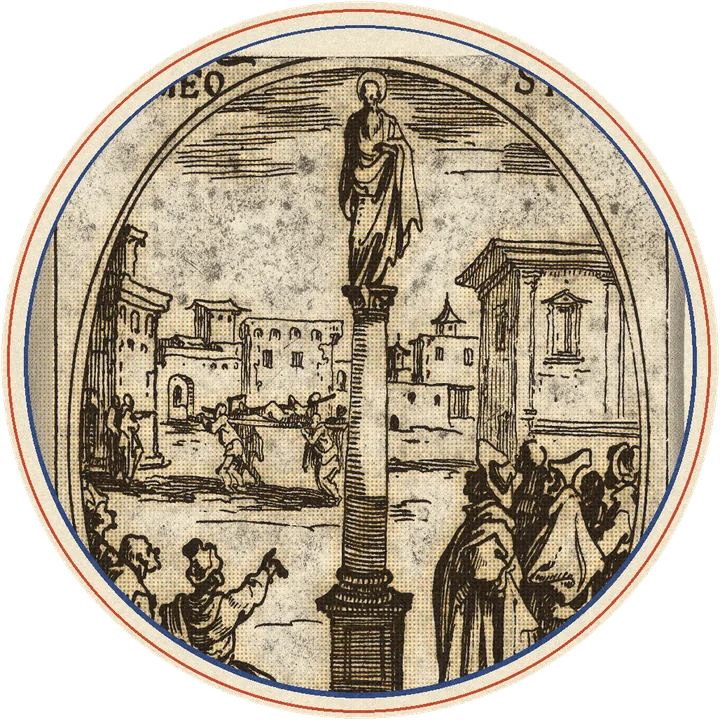
The most-read life of the 4th century
We know about Anthony from his Life, written by Athanasius of Alexandria shortly after his death. It was a hit throughout the empire. In it, the devil attacks the hermit with visions, noises and wild beasts, and Anthony holds firm. Augustine tells in his Confessions how hearing this story pushed him towards conversion. A thousand years later, German engravers were still enjoying drawing its monsters.
The monks were not always peaceful. In the great theological disputes, gangs of Egyptian and Syrian monks turned up at councils and in the streets to impose their creed by force. They were the most devout people in the empire, and the hardest to control.
Monks of the West
Monasticism reached the West later and without a common plan. It was brought by travellers who had met the desert fathers, such as Jerome or John Cassian, who founded monasteries at Marseille. For a long time each community had its own . Augustine wrote one for his community in Africa, which several orders still follow.
Martin of Tours
Martin, a soldier born in Pannonia, the one who cut his cloak in half for a beggar, founded around 361 at Ligugé, near Poitiers, the first monastery in Gaul. Elected bishop of Tours, he went on living as a monk at Marmoutier. He was the most popular saint of Merovingian Gaul.
Patrick
Patrick was a Romano-Briton. As a young man he was kidnapped by Irish pirates and spent six years as a slave on the island. He escaped, became a cleric and returned as a bishop to convert his former masters. In Ireland, with no Roman cities, the Church was organised around monasteries: abbots had more power than bishops.
Benedict and Monte Cassino
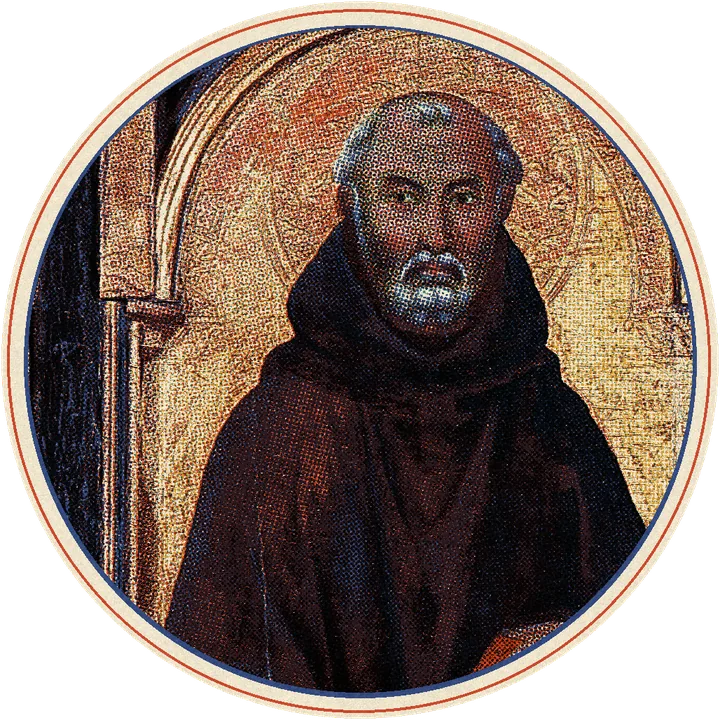
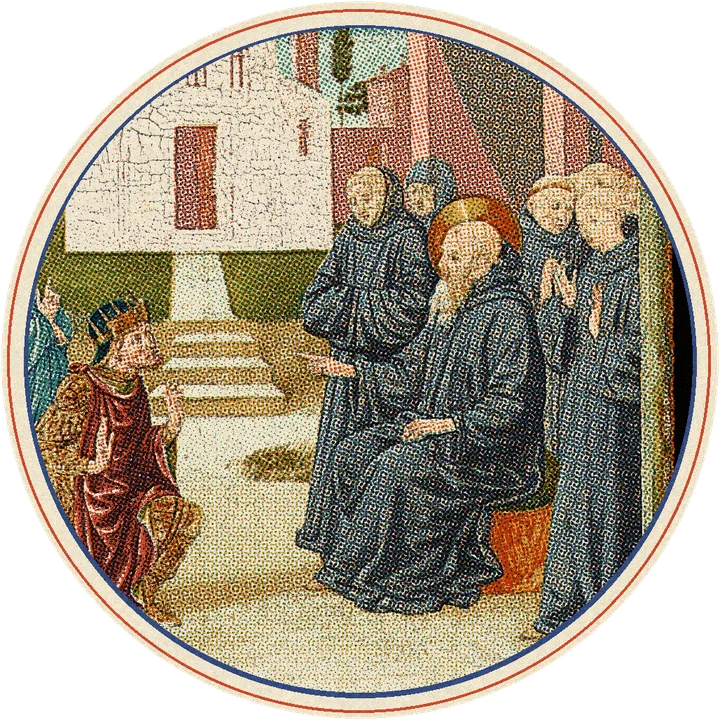
Benedict of Nursia was a hermit at Subiaco before founding, on the top of Monte Cassino, between Rome and Naples, the monastery for which he wrote his Rule. Seventy-three chapters that divide the day between prayer, work and reading, with an abbot elected for life and the duty to stay in the same monastery all one's life.
Iona and Lindisfarne
The Irishman Columba founded the monastery of Iona in 563, on an island off Scotland, and from there converted the Picts. From Iona came Aidan, who in 635 founded Lindisfarne, in Northumbria. The Lindisfarne Gospels would be painted there in the early 8th century.
Columbanus
Around 590, Columbanus left the monastery of Bangor with twelve companions. He founded Luxeuil, in Burgundy, clashed with the Frankish kings and was expelled; one of his disciples, Gall, stayed by Lake Constance. Columbanus died in 615 at Bobbio, the monastery he had founded in northern Italy.
Saint Benedict's common sense
Almost everything we know about Benedict was told by Gregory the Great in his Dialogues, half a century later, and it is full of miracles. His Rule, by contrast, is a sober text. It asks for moderation in fasting and sleep, divides the hours between the divine office, work and reading, and puts in charge an abbot elected for life, whom everyone must obey. Compared with the rigours of the Irish monks, it was a rule for ordinary people.
The famous motto ora et labora, "pray and work", does not appear in the Rule: it is a much later phrase that sums it up well. Nor was the Rule adopted overnight. For two centuries it lived alongside others, often blended with Columbanus's, until the Carolingians made it compulsory in every monastery of their empire, in 817. The Lombards destroyed Monte Cassino around 580, and its monks took refuge in Rome, with Gregory.
"Idleness is the enemy of the soul."Rule of Saint Benedict, chapter 48
Heroes to imitate
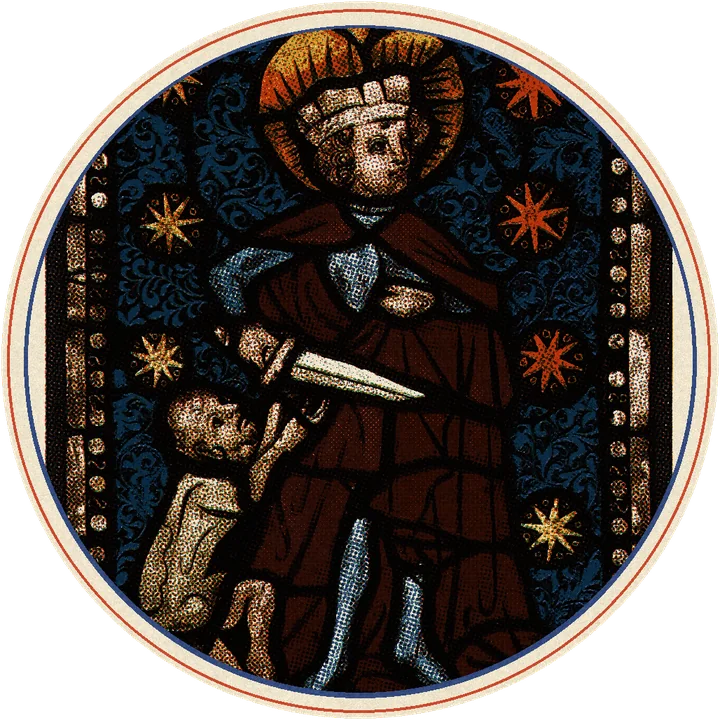
His biographer, Sulpicius Severus, tells how Martin, still a soldier, cut his cloak with his sword to give half to a beggar at the gates of Amiens, and that night dreamed that the beggar was Christ. Lives of the saints became the great genre of the early Middle Ages. They took the place once held by the acts of the martyrs: they were read aloud to teach the faithful how to live.
The keepers of the books
Meanwhile, the two halves of the old empire stopped understanding each other. In the East, Greek pushed Latin aside, and by the late 6th century Latin was used almost only in law; Heraclius made Greek the official language of the state. In the West, spoken Latin drifted away from written Latin: it lost its long vowels, gained articles and prepositions, and began turning into the Romance languages. The public schools of grammar and rhetoric closed. Anyone who wanted to write good Latin had to learn it almost as a foreign language.
The books that have come down to us survived, nearly always, because someone copied them in a monastery or a cathedral school. These are some of the names that built the bridge.
Between the death of Augustine (430) and the birth of Bede (673) almost two and a half centuries went by. In that time, the written culture of the West took refuge in a handful of libraries.
Boethius · Italy
- A senator in the service of Theodoric, he translated Aristotle's logic into Latin. Imprisoned and executed in 524, he wrote The Consolation of Philosophy in prison, one of the most-read books of the Middle Ages.
Cassiodorus · Italy
- A minister of the Ostrogoths, he retired to his monastery of Vivarium, in Calabria. His Institutions taught monks what to read and how to copy it: the as a religious duty.
Isidore · Hispania
- Bishop of Seville, he set out to gather all ancient learning, from grammar to geography, in his Etymologies. Close to a thousand manuscripts survive: it was the encyclopedia of the Middle Ages.
Bede · Northumbria
- A monk of Jarrow, he wrote the Ecclesiastical History of the English People in 731. He popularised counting years from the birth of Christ, which Dionysius Exiguus had proposed in 525, and which we still use today.
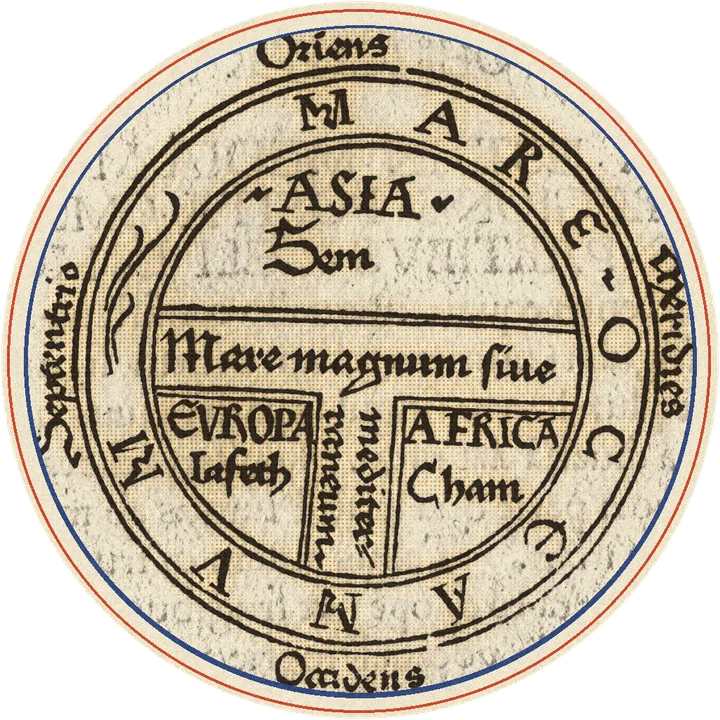
A book for a thousand years
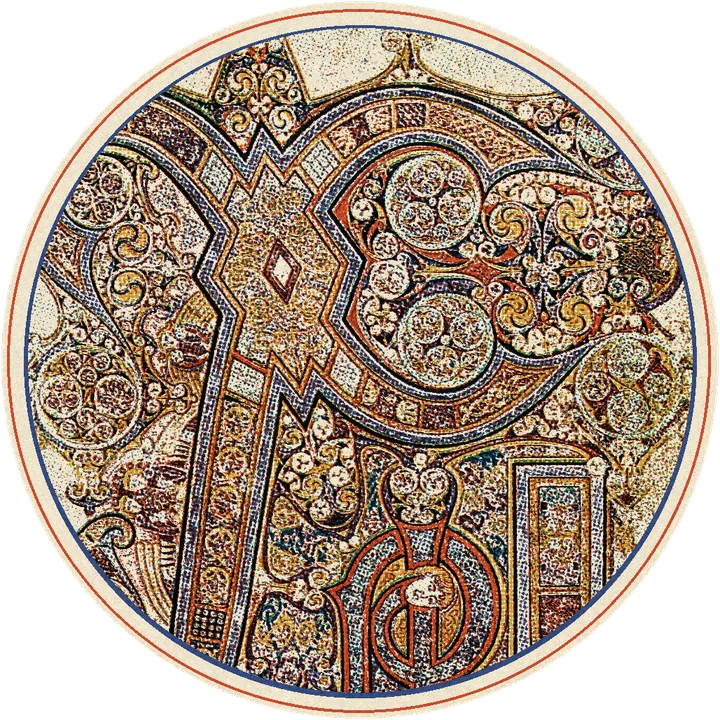
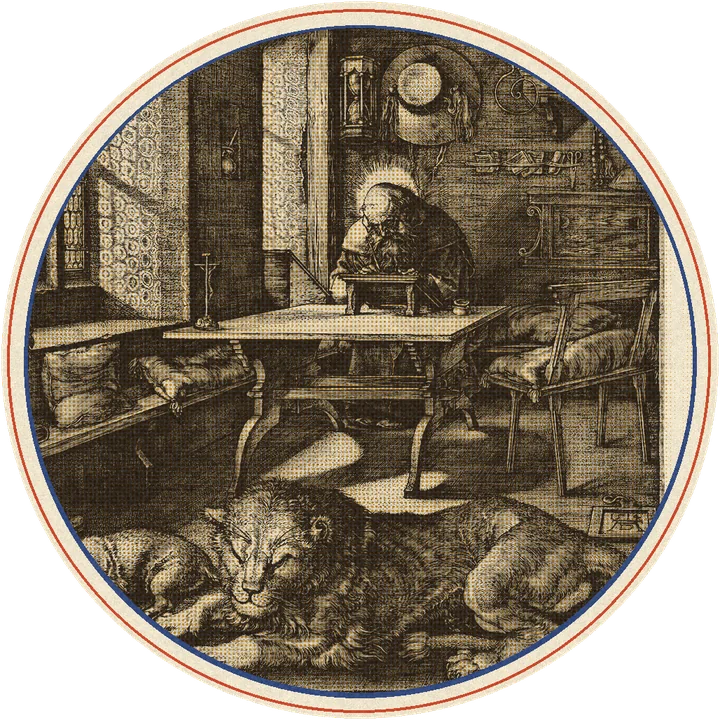
In the late 4th century, Pope Damasus asked Jerome to revise the Latin translations of the Bible, which were full of errors. Jerome learned Hebrew and translated almost the whole Old Testament from the original. His version, the Vulgate, was the Bible of the West for more than a thousand years. And Irish and Anglo-Saxon monks copied it into books that are also works of art: letters that coil into spirals, interlaced animals and colours unlike anything else on the continent.
One faith, many churches
Between 313 and 600, Christianity went from a persecuted religion to the backbone of two worlds. In the East it merged with the empire: the emperor called the councils and monks filled the desert. In the West it outlived the empire: the pope governed Rome, bishops governed the cities and monasteries kept the books.
Many fell by the wayside. Arians, Nestorians, Monophysites, Donatists, Priscillianists. Some vanished; others still pray today in Egypt, in Armenia, in Iraq or in India. The word "heresy" comes from the Greek hairesis, "choice". In these centuries, the Church decided which choices could be made.
Rome lost its empire. Its Church inherited the map.
Key dates
Tap a date to see what happened.
Twelve words to understand the early Church
Tap each word to find out what it means.
How much do you remember?
Five questions on what you have just read.