How does an empire fall?
We tend to picture the fall of Rome as a sudden collapse: one day an empire, the next day ruins. It was slower, stranger and, in many ways, more interesting than that. This is the story of two hundred years in which Europe changed hands almost without anyone noticing.
For centuries this story was told as an invasion: hordes of barbarians crossing a border and laying waste to a civilisation. Historians in the Mediterranean still call it that, the barbarian invasions. Historians in central Europe prefer another word, the migration of peoples (Völkerwanderung). The choice is not innocent. The first stresses violence; the second, the movement of families, cattle and wagons looking for land.
Both are partly right. To understand why, we have to start inside the empire, a century before anyone crossed the Rhine.
An empire begins to crack
In the 2nd century Rome was at its height. Under the Antonines, a single law, a single currency and a network of roads linked Scotland to Egypt. Caracalla's Constitutio Antoniniana (212) made almost every free man in the empire a citizen. It looked like the culmination; it was the last moment of calm.
Between 235 and 284 came the so-called military anarchy: half a century in which the armies made and unmade emperors, sometimes several at once. Sasanian Persians in the east, Germanic peoples on the Rhine and the Danube, coins with less and less silver in them, cities that walled themselves in and shrank. Latin writers from Seneca to Ammianus Marcellinus were already talking about decline: idle rulers, a population given over to pleasure and too many foreign peoples on the frontiers and within them.
From the Atlantic to the Euphrates
The empire surrounded the whole Mediterranean, which it called Mare Nostrum, "our sea". Its frontier, the , followed the Rhine and the Danube in Europe and the edge of the desert in Africa and the East.
Diocletian shares the load
To govern something so vast, Diocletian created the tetrarchy (293): two augusti and two caesars, each with his own capital (Nicomedia, Sirmium, Milan, Trier). Rome stopped being the centre of power. He also raised taxes and tied people to their trade and their land, an almost caste-like system that slowed the crisis without solving it.
A new Rome on the Bosphorus
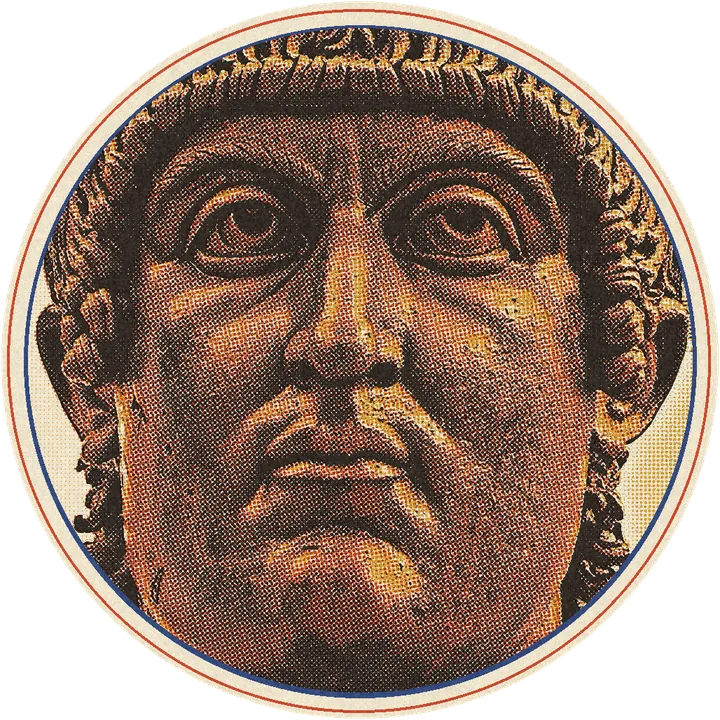
Constantine legalised Christianity with the Edict of Milan (313) and founded Constantinople, inaugurated in 330. He moved much of the administration there: the empire's centre of gravity shifted east, to its richer and more populous half.
The emperor leaves Rome
In the West the court settled in Milan, better placed to watch the Alps, and in 402 in Ravenna, protected by marshes. Rome kept the Senate and its prestige, but no longer the government. It was one of the clearest symptoms of the crisis.
Two empires
Theodosius, the last emperor to rule the whole empire, made Christianity the official religion (Edict of Thessalonica, 380). When he died in 395, his sons divided it: Arcadius in the East, Honorius in the West. This time the split was for good.
Rome once had a million inhabitants. Centuries later, perhaps ten thousand.
Each dot stands for 10,000 people. In the 2nd century Rome was the largest city in the Mediterranean world. Wars, the departure of the court and the collapse of its food supply slowly emptied it. Some estimates put the low point at around ten thousand people; others at a few tens of thousands by the 6th century. Either way, it lost more than 95% of its population.
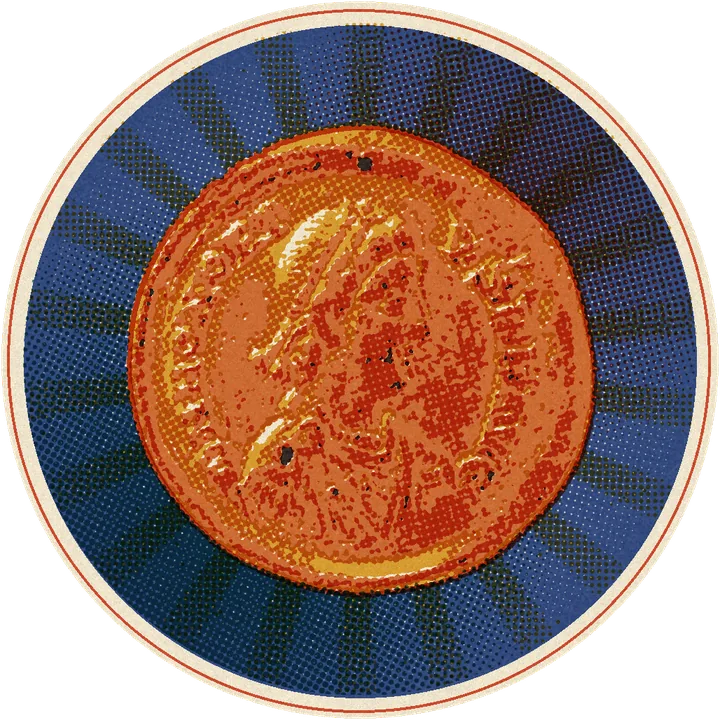
Meanwhile the army was changing from within. Citizens could pay to avoid military service, and it suited the emperors to hire troops where and when they needed them. From Constantine onwards, and above all under Theodosius, whole peoples joined it as : Franks, Goths, Burgundians or Sarmatians who fought for Rome in exchange for land and pay, under their own leaders.
Some of those leaders rose to the very top. The Vandal Stilicho and, later, Aetius became and decided who ruled. Without realising it, Rome had placed its fate in the hands of those it was supposed to defend itself against.
Beyond the limes
Barbarian is a Greek word. At first it simply meant "foreigner", someone who babbles in a language nobody understands, but it soon took on a contemptuous sense: savages living in huts, fierce and warlike, as opposed to the disciplined Romans. The historian Tacitus, in his Germania (AD 98), described them with a certain admiration: simple customs, faithful marriages, contempt for public spectacles. Romans of the early days, as it were, not yet corrupted by the city.
The problem is that almost everything we know about them was written by others. The Germanic peoples left little more than runic inscriptions. Their own histories came much later: Bede and Paul the Deacon in the 8th century, written law codes, the poem Beowulf. Today it is archaeology that corrects the picture left to us by classical authors.
A frontier of rivers and towers
The limes was fortified with towers and camps, but in many stretches it was easy to cross: there were not enough men or resources. On the other side lived peoples of every kind, some hostile and some allied, and with very different degrees of "civilisation".
Peoples of the sea
The Angles and Saxons lived on the North Sea coast; the Jutes and Frisians in Jutland and around the mouth of the Elbe. In Britain and Ireland lived the Picts and the Scots. They were Iron Age peoples organised in clans, and their raids ravaged the coasts of Britain and Gaul.
Neighbours of the frontier
The Franks lived at the mouth of the Rhine; the Alamanni between the Rhine and the Danube; the Quadi and Marcomanni on the Middle Danube. They were pagans, with a society of warriors and farmers.
Peoples with kings
Further east, along the Elbe and the Oder, were the Burgundians, Vandals and Lombards: better organised, led by kings, and many of them already converted to Christianity.
The Goths of the steppe
Beyond the Danube, on the plains of today's Romania and Ukraine, the Visigoths and Ostrogoths had settled. Alongside the Alans they became expert horsemen, and their contact with Constantinople made them the most Romanised of all. Further away were two neighbours of a different kind: the powerful Persian Empire on the Euphrates and the Berbers in Africa.
The Germanic peoples, region by region
Religion matters: the Romans of the West were Catholic, while many Germanic peoples were ARIAN, a difference that divided conquerors and conquered for generations. Others were still PAGAN, worshippers of Woden and Thor.
Northern Europe
- Angles, Saxons, Jutes P → Britain
- Frisians P → North Sea coast
Western Europe
- Franks P → Gaul; later Catholic
- Alamanni P → Alsace and Swabia
Central Europe
- Burgundians A → Savoy
- Vandals A → Hispania and Africa
- Suevi P → Gallaecia
- Lombards A → Italy (568)
- Quadi, Marcomanni → Danube
Eastern Europe
- Visigoths A → Gaul and Hispania
- Ostrogoths A → Italy
The steppes
- Alans (Iranian) → Hispania and Africa
- Huns (nomads from Asia) → Pannonia
Beyond Europe
- Sasanian Persians, capital Ctesiphon
- Berbers, African frontier
The Huns push everyone
For centuries the peoples beyond the limes lived alongside Rome: they traded with it, sold it slaves and amber, served in its legions. It was an unstable balance, but a lasting one. It was broken by a people from the steppes of Central Asia.
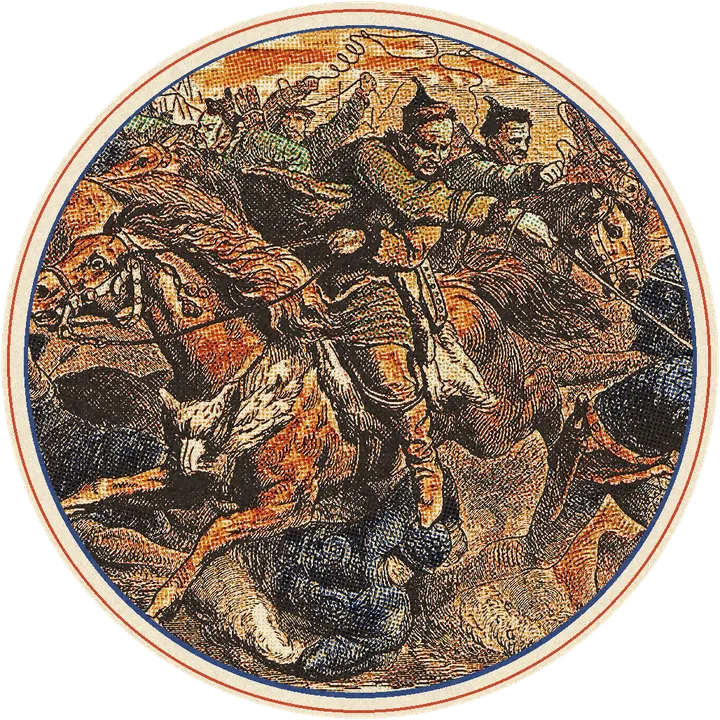
The Huns were nomads who did not farm. They lived in large tents of hide and felt mounted on wagons and were extraordinary horsemen, with a mobility the slow legions could not match. Around the 4th century they began to move west, skirting the Caspian Sea to the north.
The Huns arrive
They crossed the Volga and the Don, subdued the Alans and pushed them west. One people pushed the next, like dominoes.
The Goths ask for refuge
The Huns defeated the Ostrogoths. The terrified Visigoths asked Emperor Valens for permission to cross the Danube. In 376 they moved into Moesia, today's Bulgaria, under a : never before had such a large group entered the empire.
Adrianople
Food ran short and Roman governors exploited the newcomers. Revolts broke out, and Valens marched out to crush them without waiting for Gratian's reinforcements. He was defeated and killed in battle. An emperor dead at the hands of a refugee people: the blow was immense.
Goths inside the empire
Theodosius negotiated a new treaty with them and settled them in Moesia as federates. For the first time, an entire people with its own leaders and laws lived inside the frontiers in the service of Rome.
Alaric marches on Rome
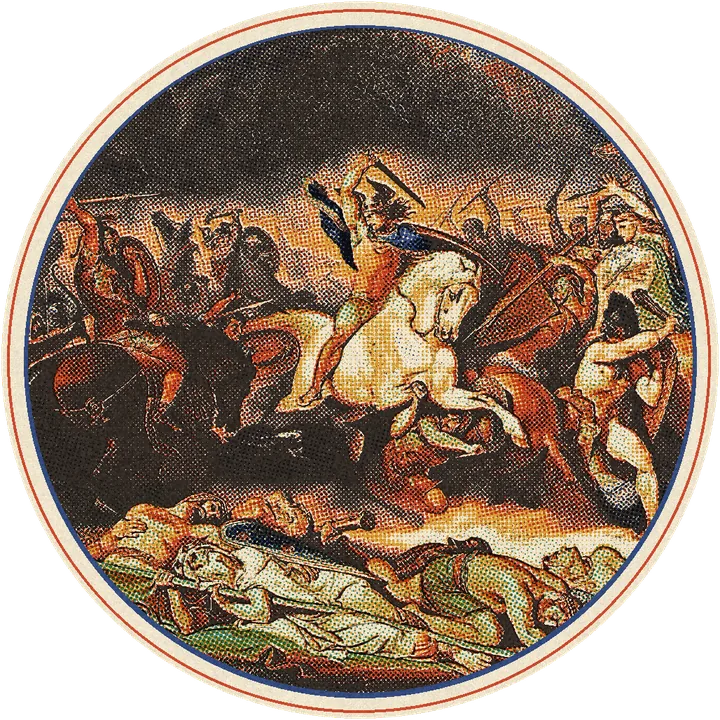
After Theodosius died, the Visigothic king Alaric demanded the post of magister militum. He invaded Italy in 401 and was driven back by Stilicho. But in 408 Honorius had his own general executed and fled to Ravenna. The road lay open: on 24 August 410, Rome was sacked for the first time in eight centuries.
On to Gaul
Alaric died shortly afterwards in southern Italy. His successor, Athaulf, married to Galla Placidia, Honorius's sister, led the Visigoths into Gaul in 412. In 418 Rome settled them in Aquitaine: the Kingdom of Toulouse was born.
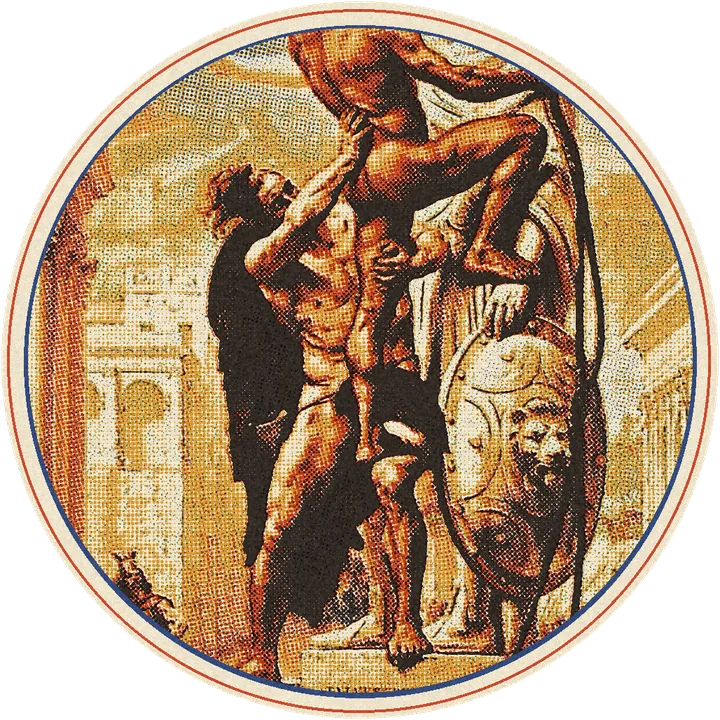
"If Rome can perish, what can be safe?"Saint Jerome, in a letter written in Bethlehem on hearing the news (412)
The sack lasted three days. Militarily it meant little: Rome was no longer the capital. But the moral blow was enormous. Pagans blamed Christianity for angering the old gods. Saint Augustine replied with The City of God: Rome had been great while it practised the virtues, and its sins had brought divine punishment upon it. That idea, of a God who intervenes in history, would shape all medieval history-writing.
The great migrations
While Alaric kept Stilicho busy in Italy, the Rhine was left almost unguarded. Pressure from the Huns had pushed the Alans onto the plains of Hungary, where the Hasding Vandals lived. Together they moved west, sweeping along the Siling Vandals and the Suevi.
They cross the Rhine
Vandals, Suevi and Alans crossed the Rhine at Mainz, defended only by federate Franks. For almost three years they roamed and plundered Gaul, a slow march with women, children and livestock. In the autumn of 409 they crossed the Pyrenees.
Hispania divided up
After coming to terms with the emperor, they shared out the peninsula. The Suevi and Hasding Vandals took Gallaecia; the Alans, Lusitania and Carthaginiensis; the Siling Vandals, Baetica. Tarraconensis remained Roman. The chroniclers Orosius and Hydatius recorded the sufferings of the Hispanic population.
Rome uses the Goths
Since the treaties were not being kept, the empire commissioned the Visigothic king Wallia to subdue the newcomers. He wiped out the Silings and the Alans; the survivors took refuge in Gallaecia. In return, in 418 the Visigoths received Aquitaine, with its capital at Toulouse.
The Vandals leap to Africa
Gunderic's Vandals and Alans took Baetica and learned to sail. In May 429 his successor Genseric crossed the Strait with some 80,000 people, according to Victor of Vita. Saint Augustine died during the siege of Hippo (430). In 439 Carthage fell: the first independent Germanic kingdom, recognised by Constantinople in 474.
Gaul divided
The Salian Franks spread across today's Netherlands and Belgium, with their capital at Tournai; the Ripuarian Franks along the Middle Rhine, around Cologne. They were the only ones who never lost touch with their homeland. The Burgundians, defeated by Aetius in 436, settled in Savoy in 443. Their defeat inspired the epic poem The Nibelungenlied.
Britain is left alone
The last Roman troops left the island in 407. Picts and Scots came down from the north and from Ireland; Angles, Saxons and Jutes landed on the east coast. Many Britons emigrated to the continent, to what is now Brittany in France.
Invasion or migration?
The numbers help to decide. The peoples who crossed the Rhine or the Strait numbered, at most, tens of thousands, compared with several million Hispano-Romans and Gallo-Romans. They did not replace the population: they settled among it, often as who received part of the land, and ended up adopting its Latin, its laws and, in time, its religion.
Attila and the last emperor
By the early 5th century the Huns were no longer a distant people. They had settled on the plains of Ukraine and Romania, and around 405 they entered Hungary. Many served as mercenaries in the Roman army itself.
A king in Pannonia
Attila murdered his brother Bleda and became sole king. His court was international: Germans, Greeks and Romans served him. His secretary was Orestes, father of the future last emperor of the West; his ambassador, Edeko, father of Odoacer.
The Catalaunian Fields
Attila claimed Honoria, the emperor's sister, as his wife, and half the empire with her. In the spring of 451 he crossed the Rhine, took Metz and Reims and besieged Orléans. Aetius, with an army of federates that included Theodoric's Visigoths, stopped him on the Catalaunian Fields, near Troyes. Theodoric died in the battle.
Italy, and the end
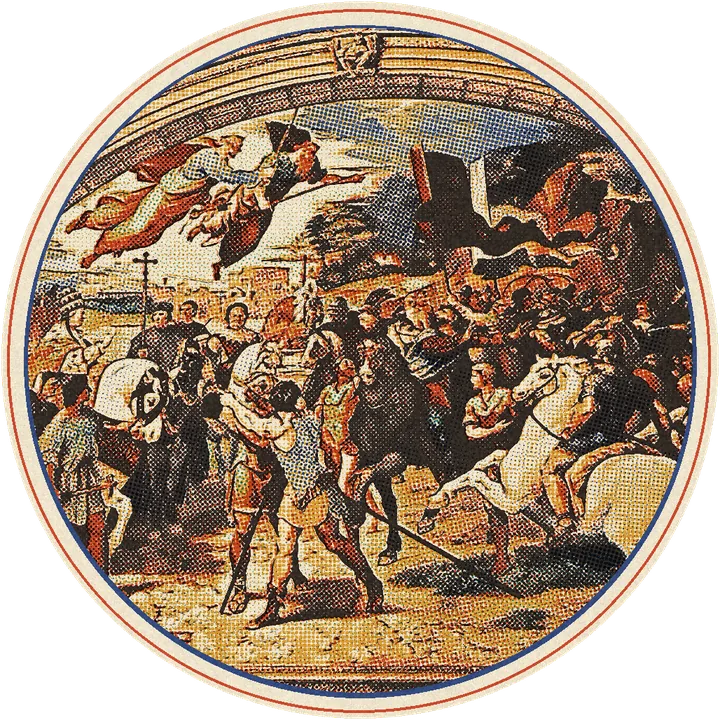
The following year Attila razed Aquileia and reached Milan and Pavia. Pope Leo the Great went out to meet him and secured his withdrawal, in exchange for a large tribute. Attila died in his sleep in 453. His empire fell apart in fighting between his sons, and the subject peoples (Gepids, Ostrogoths) regained their freedom.
An administrative gesture
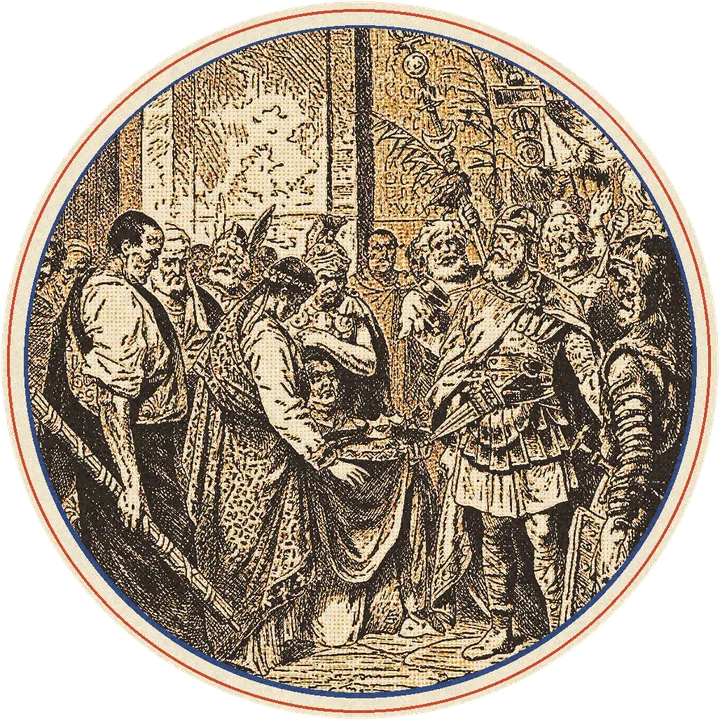
Valentinian III, jealous of Aetius, killed him with his own hands in 454; months later one of Aetius's soldiers killed the emperor. Nine emperors followed in twenty-one years. Then the magister militum Odoacer deposed the young Romulus Augustulus in Ravenna and, without crowning himself, sent the imperial regalia to Zeno in Constantinople. One emperor, in the East, was enough.
The last reigns in the West, 455–476
Between 465 and 467 there was no emperor in the West. Julius Nepos, deposed in 475, kept claiming the title from Dalmatia until his death in 480.
The kingdoms that came after
Nothing collapsed overnight in 476. Cities were still inhabited, bishops stayed in their sees and Roman officials kept collecting taxes, now for Germanic kings. What had changed was who was in charge.
A new map
Visigoths in Hispania and Aquitaine, Suevi in Gallaecia, Franks in northern Gaul, Burgundians on the Rhône, Ostrogoths in Italy, Vandals in Africa and Anglo-Saxons in Britain. Only the East was still the Roman Empire.
Vouillé
Clovis, king of the Franks, defeated and killed Alaric II at Vouillé, near Poitiers. The Visigoths lost almost all of Gaul and fell back into Hispania, to Tarraconensis and Baetica. Their largest settlements, around Burgos, Palencia and Valladolid, have left 6th-century cemeteries.
Theodoric in Ravenna
Zeno sent Theodoric's Ostrogoths into Italy against Odoacer, whom Theodoric killed at a banquet in 493. Theodoric admired Rome: he left the administration in Roman hands, tolerated Catholics and filled Ravenna with palaces and churches. History called him "the Great".
Justinian wants it all back
The Eastern emperor sent Belisarius against the Vandals, whose kingdom fell in 534, and then against the Ostrogoths, in a twenty-year war that ruined Italy. The Byzantines also established themselves in south-eastern Hispania.
Toledo and unity
Leovigild unified the peninsula: he annexed the Suevic kingdom (585) and recovered part of Baetica. His son Reccared converted to Catholicism at the Third Council of Toledo (589). Visigoths and Hispano-Romans finally shared a single faith.
Epilogue
The Visigothic kingdom lasted until 711, undermined by the so-called "Gothic disease", the habit of murdering the king to seize the throne. The Franks, by contrast, allied with the Church since Clovis's baptism, became the great power of the West. Charlemagne would come from among them.
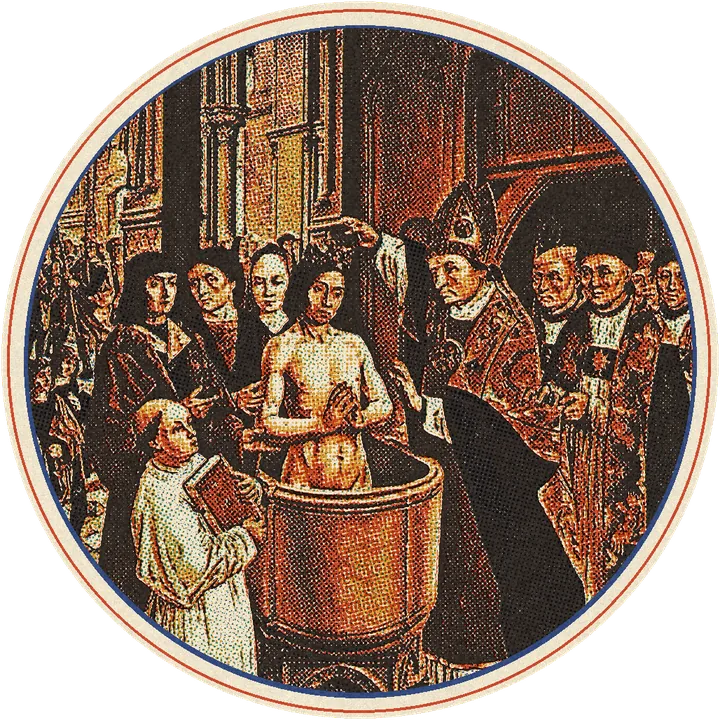
A transformation, not a collapse
While Britain lost almost every Roman trace and split into the seven kingdoms of the Heptarchy (Kent of the Jutes; Sussex, Essex and Wessex of the Saxons; East Anglia, Mercia and Northumbria of the Angles), Ireland, which had never been Roman, became with Saint Patrick the great centre of Christianity. Its monks would evangelise half of Europe between the 6th and 8th centuries.
It is one of the paradoxes of the period: what looked like the end of Rome was also the beginning of something else. The Germanic kingdoms inherited the empire's Latin, its law, its cities and its Church, and mixed them with their own customs. Out of that mixture came medieval Europe.
The barbarians did not destroy Europe. They transformed it.
The key dates
Tap a date to see what happened.
Twelve words to understand the end of Rome
Tap each word to find out what it means.
How much do you remember?
Five questions on what you have just read.